

Trump Bullying Allies To Help in Iran Suggests He Knows the War Is Not Going Well
NATO allies aren’t obligated to join the war. The sooner Trump accepts that, the better.
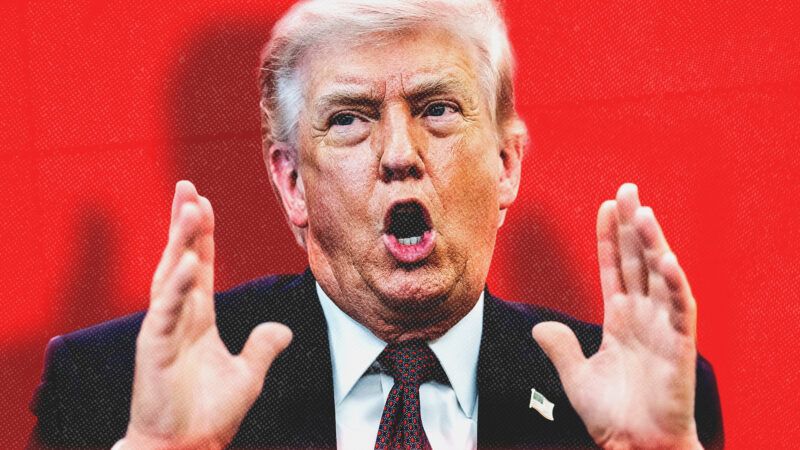
President Donald Trump is growing frustrated that allied countries are not stepping up to help the U.S. in its war of choice with Iran.
In a Truth Social post on Tuesday, Trump encouraged "all of those countries that can't get jet fuel because of the Strait of Hormuz" to buy American oil instead. The post criticized countries that "refused to get involved in the decapitation of Iran," explicitly naming the United Kingdom, and urged them to "build up some delayed courage, go to the Strait, and just TAKE IT.…The U.S.A. won't be there to help you anymore, just like you weren't there for us…Go get your own oil!"
This supposed betrayal has led Trump to consider leaving NATO, as none of its member states joined the U.S. in the war it started, reports The Telegraph. Yet, NATO countries are under no obligation to help the U.S. in this war because the U.S. and Israel delivered the first blows, not Iran.
Defense Secretary Pete Hegseth echoed Trump's statements on Tuesday by mocking the U.K.'s "big bad Royal Navy" for not doing enough to reopen the Strait of Hormuz. "There are countries around the world who ought to be prepared to step up," he said.
Unsurprisingly, these comments haven't convinced European allies to join the war. "Whatever the pressure on me and others, whatever the noise, I'm going to act in the British national interest," British Prime Minister Sir Keir Starmer said during a press conference on Wednesday. "This is not our war, and we're not going to get dragged into it." However, the U.K. has convened discussions with 35 other countries to reopen the Strait of Hormuz after the war is over, Al Jazeera reports.
Trump's social media posts are just the latest revelation of the administration's incoherent strategy and objectives for the war in Iran.
Days after the initial U.S.-Israeli strikes, Hegseth announced that the war had four objectives: "destroy Iranian offensive missiles," "destroy Iranian missile production," "destroy their navy and other security infrastructure," and ensure "they will never have nuclear weapons." Hours later, Trump said the war was needed to ensure Iran "cannot continue to arm, fund and direct" proxy groups, such as Hezbollah in Lebanon and the Houthis in Yemen. Since then, the Trump administration officials have continued to provide inconsistent explanations for the war, including Secretary of State Marco Rubio, who on Monday said that destroying Iran's air force was one of the U.S.'s four objectives. On Wednesday, he justified the war as the "last best chance" to prevent Iran from building a "conventional shield" to protect its nuclear weapon facilities.
The timeline and exit strategy for the war, too, have been inconsistent. Trump has said that ceasefire talks will commence only when the Strait of Hormuz is "open, free and clear," but he has also told allies that he is willing to end the war in Iran, even if the Strait of Hormuz remains effectively closed.
Trump's increasingly erratic tone suggests a recognition that the war is neither as contained nor as close to resolution as he claims. He should stop expecting other countries to help him finish the war he started.




