
DHS Spokesperson Tricia McLaughlin Goes Out at the Top of Her Game
McLaughlin made a habit of flinging accusations against people that were later proven false by video evidence or never resulted in criminal convictions.
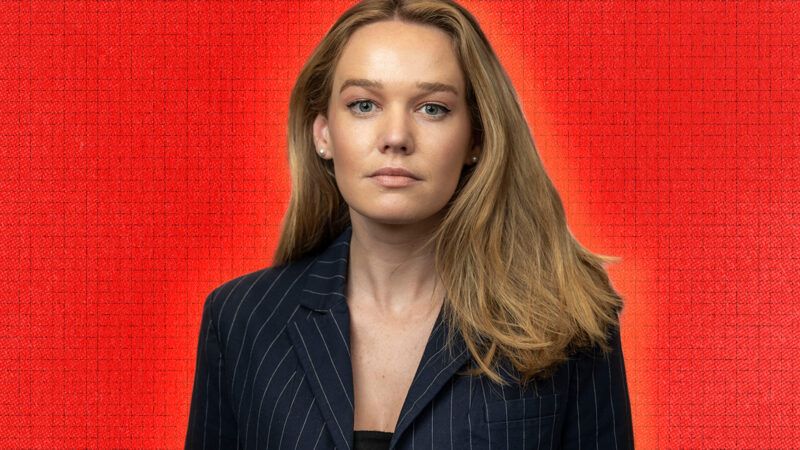
Politico reported Tuesday that Tricia McLaughlin, a Department of Homeland Security (DHS) spokesperson who frequently made false statements about violent incidents involving federal immigration officers, is leaving the agency.
McLaughlin, the DHS assistant secretary for public affairs, is stepping down after less than a year on the job amid reports of internal conflict at DHS. The agency came under bipartisan criticism and fierce public backlash last month over comments by DHS Secretary Kristi Noem and other top officials defending the fatal shootings of Renee Good and Alex Pretti by federal immigration officers.
But on a day-to-day basis, McLaughlin was the combative voice of DHS in statements to the press. Her quotes raised eyebrows not just because they often contained non sequitur attacks on media and other subjects of the administration's ire, but because they included accusations that were either unsupported, contradicted by video, or later tossed out of court.
The statements in some instances were so obviously false that they created problems for the mainstream media, where objectivity standards and fear of losing access traditionally led many newsrooms to avoid calling such things outright lies.
As The Washington Post carefully wrote in its article on McLaughlin's departure, relegating the key point to a subordinate clause, "Her forceful pronouncements have drawn criticism from Democrats and immigrant rights groups, who point to incidents in which statements she made were later contradicted in court or in video footage recorded by witnesses."
Reason put it more bluntly in an October headline: "Homeland Security Won't Stop Lying About Who Immigration Enforcers Are Arresting."
In one of the most recent examples, McLaughlin claimed that a Venezuelan immigrant had "mercilessly beat" a federal immigration officer in Minneapolis. However, federal prosecutors dropped charges against the man, writing in a court filing that "newly discovered evidence" was "materially inconsistent with the allegations" the officers had made.
McLaughlin made similar pronouncements following the fatal shootings of Good and Pretti in Minneapolis this January. She claimed Good had "weaponized her vehicle" in an "act of domestic terrorism." Likewise, she told media outlets that Pretti "violently resisted" officers, and that it looked like "a situation where an individual wanted to do maximum damage and massacre law enforcement."
One of the most notorious cases was Marimar Martinez, a Chicago woman who was shot five times by a Border Patrol officer last October. The same day as the shooting, DHS published a press release including a statement from McLaughlin claiming that Martinez had "rammed" the Border Patrol vehicle with her car and then tried to run over an officer, forcing the officer to fire defensive shots.
A follow-up DHS press release announcing the arrest of Martinez and another man in her car repeatedly called the two "domestic terrorists."
Later in November, federal prosecutors filed a motion to dismiss the charges against Martinez after viewing the video evidence. That body camera footage was unsealed this month at Martinez's request, and it shows the Border Patrol officer intentionally swerved into her car.
For a Reason story about the arrest of a Chicago TV news producer, the DHS Office of Public Affairs emailed a statement attributed to McLaughlin claiming that the woman "threw objects at Border Patrol's car and she was placed under arrest for assault on a federal law enforcement officer." However, bystanders' video contradicted the chronology of events in DHS' narrative. DHS never responded to requests for clarification. The woman was never charged with a crime.
Even after charges are dropped against defendants or they're exonerated by video, DHS has refused to correct its previous statements or back down. In Martinez's case, for example, the judge ruled that it was appropriate to unseal the evidence because DHS continued to call Martinez a "domestic terrorist" in statements to the press.
"I also think that we're finding ourselves in an unusual situation in which the government made exceedingly public statements about a criminal defendant, who under our American system of justice is presumed innocent, and have made no efforts to equally publicize the fact that they abandoned the opportunity to convict her, to try to convict her in a court of law, even though that's completely within their power to do that," U.S. District Judge for the Northern District of Illinois Georgia N. Alexakis said at a court hearing.
During her brief tenure, the outgoing DHS spokesperson was one of the most prominent liars in politics. It makes sense for her to step down now at the top of her game. What Everests were left for McLaughlin to summit? What seas left unsailed?
All joking aside, as I argued in a recent radio interview with WBUR, for the government to say things that are not true about U.S. citizens who've been subjected to state violence is a very serious matter. McLaughlin's replacement will hopefully understand the gravity of this.
