
'Billionaire' Tax is a Bait-and-Switch To Gouge the Middle Class
Proposals sold as targeting extreme wealth would fundamentally change how Americans are taxed—turning any ownership into a recurring liability for the middle class.
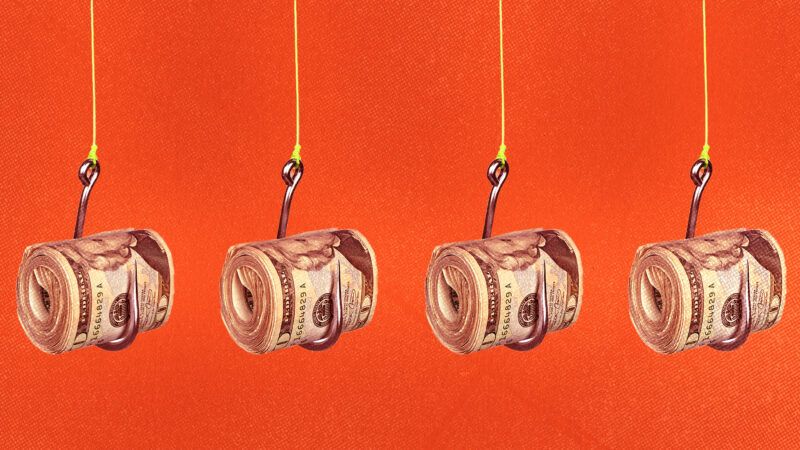
Supporters of a "billionaire tax"—an idea being pushed both nationally and in California—claim it will impact only those who can "easily afford it." In fact, it's a Trojan horse. The next step will be to come after middle-class retirement funds and middle-class homes.
By exploiting working people's frustrations—"Mark Zuckerberg bought 11 homes so his family can have privacy, I can't afford a down payment on one!"—concentrated media campaigns are baiting us to cheer on the creation of an entirely new tax system. Under the cover of "soaking the rich," we are at risk of giving Uncle Sam permission to inventory every item in our possession and claim a percentage of that value every year.
That would be seismic. It would usher in a new relationship between the American people and the Internal Revenue Service (IRS).
The United States has historically taxed income and transactions: what you earn, what you buy, what you realize when you sell. A net-worth tax moves the target to ownership itself. Everything you own, from your family farm to your retirement nest egg to your grandfather's pocketwatch to your Pokémon collection, would become a potential revenue stream for the state.
In case you're under the impression that this rule will apply to Bill Gates and Jeff Bezos but not to your parents and your neighbors, remember how politicos sold us the income tax.
In 1895, the Supreme Court struck down one attempt at a federal income tax, saying it was forbidden by the Constitution, after Congress assessed a two-percent flat tax on incomes over $4,000 a year (less than 1 percent of the population at the time, situated similarly to millionaires today). To allow Congress to tax our income directly, the Constitution had to be modified—hence the Sixteenth Amendment in 1913.
From 1914 through 1917, Congress expanded the pool of taxpayers from fewer than 400,000 to 3.5 million and doubled the tax rate on the lowest eligible incomes. The top bracket, who'd been told they would pay only 3 percent, paid an effective rate 5 times that high.
Don't think a wealth tax would undergo a similar expansion? The expansion is the whole point. The total net worth of U.S. billionaires is roughly $8 trillion. There are around 1,000 of them, depending on market conditions. That's enough money to run the federal government for less than 9 months before being completely exhausted. You would have obliterated that money's productive potential (not to mention the market devastation from dissolving huge chunks of public companies)—and the ravenous spending machine still wouldn't be satisfied.
But the tools that made the $8 trillion in billionaires' assets accessible to the IRS could also be turned on the middle class and everyone else. Our collective net worth, after all, is $170 trillion—20 times that of billionaires.
For a Congress addicted to spending and allergic to fiscal accountability, the honeypot of middle-class ownership will be irresistible. The average middle-class household owned $490,000 in wealth in the second quarter of 2025 (the most recent data from the Federal Reserve), including homes, retirement accounts, and college savings.
We know how the bait-and-switch works. Launch a new tax at the very top, codify the authority, normalize the compliance regime, and then gradually lower the thresholds, broaden the base, and expand the reach. When proponents say, "Don't worry, this is only for the ultra-rich," understand that as rhetorical cover—a "Look over there, at his wedding and his yacht!" so you won't notice the sucking straw snaking into your own back pocket.
An asset tax establishes a precedent. The government would get to appraise people's property and send them a bill for the privilege of not having it taken. Every American life would be transformed into a perpetual valuation case file, ripe for mining whenever the nation's most drunken spenders want to up their ante.




