
ICE's Presence at the 2026 Winter Olympics Is Sparking International Backlash
Even in a limited security role, ICE has triggered backlash abroad, reflecting the agency’s unpopularity at home and overseas.
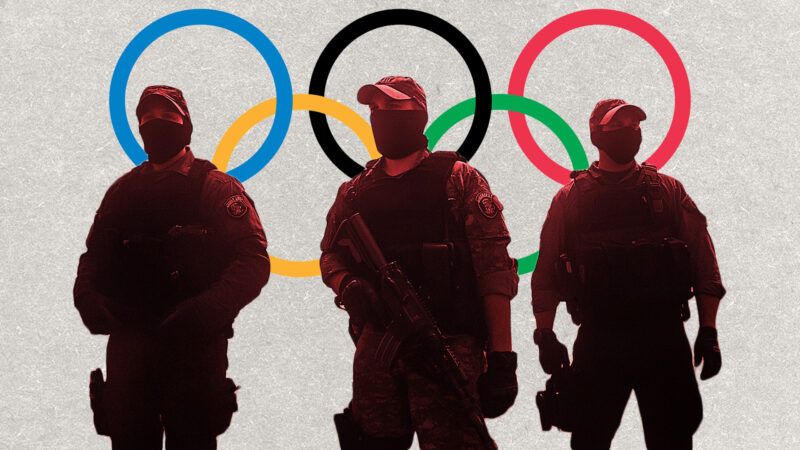
In most years, the main controversy leading up to the Olympics has to do with team uniforms or which countries will take part in the games. For this year's Winter Olympics in Milan and Cortina d'Ampezzo, the hottest issue is security.
On Tuesday, the U.S. announced it would include agents from Immigration and Customs Enforcement (ICE) as part of its security detail. ESPN reported that any ICE personnel associated with the games would come from Homeland Security Investigations (HSI), an investigative unit that has supported Olympic security efforts before and typically focuses on transnational crimes such as smuggling operations, drug trafficking, and complex financial cases. This unit is distinct from ICE's more widely known Enforcement Removal Operations division, which has dominated headlines amid President Donald Trump's domestic immigration crackdown.
In a statement to NPR, Department of Homeland Security spokeswoman Tricia McLaughlin clarified that ICE would be "supporting the U.S. Department of State's Diplomatic Security Service and host nation to vet and mitigate risks from transnational criminal organizations." Officials from Italy's interior ministry have likewise emphasized that ICE personnel would work out of U.S. diplomatic facilities, such as the Milan consulate, and would not be deployed in public spaces or run security operations on the ground. On Friday, the U.S. Olympic and Paralympic Committee clarified that ICE will not conduct security or enforcement activity at the games and that Olympic security remains under Italian authority, as reported by Straight Arrow News.
Despite these reassurances, the announcement that ICE would serve as security at the games has elicited a hostile reception from local officials. Calling ICE "a militia that kills," Milan Mayor Giuseppe Sala told Italy's RTL radio, "It's clear that they are not welcome in Milan, there's no doubt about it. But I wonder, could we ever say 'No' to Trump?…We can take care of their security ourselves. We don't need ICE."
Opposition expanded beyond Milan's city hall to include left-wing parties and activist groups, many of whom are already vocal critics of Italy's center-right government, The Guardian reports. For these groups, ICE's presence has become a symbol of Trump-era immigration enforcement and a focal point for broader criticism of Italy's security arrangements. Organizers have circulated petitions and announced an "ICE OUT" rally timed to the February 6 opening ceremony.
Even if ICE's role at the games is limited to support functions, significant questions remain unanswered. Officials have not specified how many agents will be involved, how information will be shared, or what limits exist to prevent a temporary Olympic assignment from evolving into a lengthier security campaign. In the absence of clear public detail—and given ICE's reputation for opaque internal practices—it is unsurprising that the agency's involvement has met resistance in Italy. That reaction, mirroring criticism in the United States, reflects a broader pattern: Enforcement agencies widely perceived as unaccountable tend to generate backlash wherever they appear, regardless of nuance or national boundaries.
