

The U.S. Is Forcing Afghan Allies Into Exile With No Way Forward
After being moved to Qatar and left in bureaucratic limbo for years, Afghan evacuees are now being relocated again—but no one knows where to.
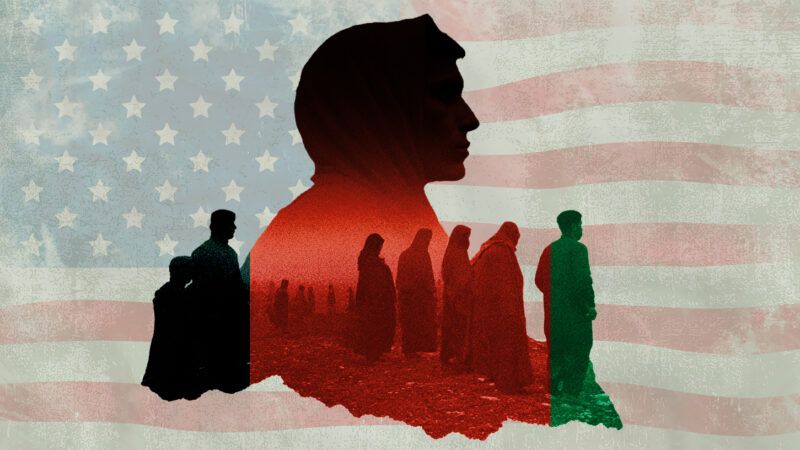
In just two months, the approximately 1,100 Afghan residents of Camp As-Sayliyah (CAS) in Doha, Qatar, will be relocated off base. Residents awaiting processing for stalled U.S. refugee and visa programs still do not know which country they will call their next home.
The State Department Office of Press Operations confirms that Afghans will be relocated from CAS by March 31 and that the site will "fully demobilize" by the end of the fiscal year. The office tells Reason that the CAS platform "is a legacy of the Biden Administration's attempt to move as many Afghans to America as possible—in many cases, without proper vetting."
The State Department says that "the Trump Administration has no plans to send these people back to Afghanistan," but claimed that "it is not appropriate or humane to keep this group of individuals on the platform indefinitely." It further asserts that "moving the CAS population to a third country is a positive resolution that provides safety for these remaining people to start a new life outside of Afghanistan while upholding the safety and security of the American people."
Shawn VanDiver, president of #AfghanEvac, says the claim that CAS is a product of improper vetting is false. "The United States government made the decision to move these Afghans to CAS, and it did so after extensive screening—often multiple rounds—using the same interagency processes that have governed Afghan relocations for years."
VanDiver adds that Afghans on the platform "were evacuated, then left in limbo, sometimes for years, due to policy choices, shifting authorities, and political hesitation." While he agrees that keeping people on a temporary platform indefinitely is inhumane, VanDiver says the question moving forward is "what responsibility the United States is willing to accept for people it moved there in the first place." He argues that "third-country relocation may be appropriate in some cases, but it should be voluntary, transparent, and genuinely durable," adding that "dropping people into countries where they have no ties, limited legal protections, and uncertain futures is not a 'solution' if it simply exports the problem and strips people of agency."
No Answers From Washington
On January 21, several CAS residents reported that base leadership met with them, but have yet to specify which country Afghans will be relocated to or clarify whether they will continue processing for U.S. programming in their next location.
Two residents mentioned that many Afghans believe they may be moved to an African nation. Another resident said that Central or South America has also been floated as an option.
According to one CAS resident, multiple Afghans told the leadership that they would reject relocation to any impoverished nation where they would struggle to find work opportunities and reasonable education options for their children. The leadership told them that they would relay their message back to Washington.
Most of the population at CAS consists of U.S. Refugee Admissions Program (USRAP) applicants whose processing was halted after President Donald Trump suspended the USRAP by executive order on January 20, 2025. A smaller population of Special Immigrant Visa (SIV) applicants have received denials, and could not be processed at CAS unless they were granted an appeal. With the SIV program also now paused, applicants in that pipeline who manage to reach the interview stage are reportedly receiving unappealable visa denials.
VanDiver says that more than half of the CAS population consists of women and children, and that 150 residents are family members of U.S. military personnel.
Paying Afghans To Return to Danger
The U.S. government has offered cash incentives for CAS residents willing to repatriate to Afghanistan. According to a leaked copy of the current cash incentive letters, the U.S. government offers the empty commitment to "attempt to conduct a welfare check immediately" upon the applicant's arrival in Afghanistan.
For Afghans whose relocation by the U.S. was predicated upon the danger they faced in their homeland, and who have seen the safety they were promised vanish due to flip-flopping U.S. government policies, the offer is really a slap in the face.
No Way Forward for Afghan Allies
With all pipelines for Afghan resettlement now frozen, evacuation groups that continue to support SIV and USRAP applicants stuck in Afghanistan or third countries face a particularly expensive and difficult reality as they attempt to fund safe houses and other support measures for individuals who have no prospects of relocation for at least several years.
Individuals often await processing in Pakistan, whose government has ruthlessly deported one million Afghans in the last year, whether or not they have ties to the U.S. government.
Andrew Sullivan, executive director of the nonprofit No One Left Behind, said that seven Afghan principal applicants who were living with their families in his organization's safe houses in Pakistan have been deported in the past month.
Afghan allies continue to face dramatic changes in circumstances following the U.S. government's about-face on the programs designed to reward them for their loyalty. If no changes are made to reinstate these important programs, the stain on America's reputation will be permanent.




