
Trump Wants Oil Companies To 'Fix' Venezuela's Infrastructure
That's easier said than done.
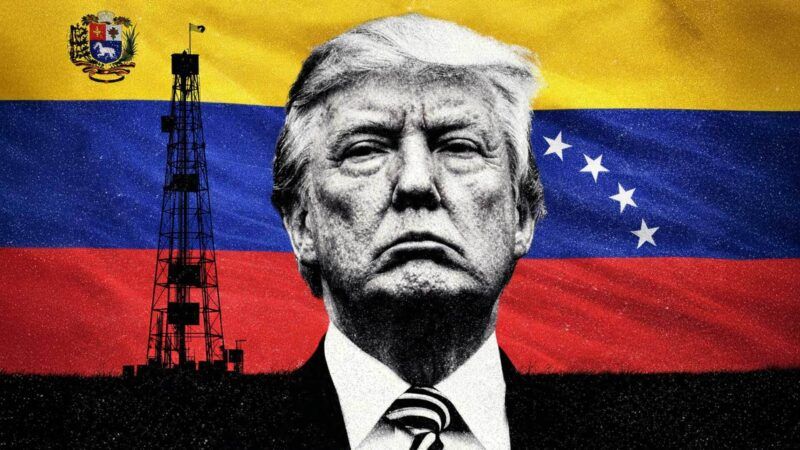
Over the weekend, American military forces arrested Venezuelan dictator Nicolás Maduro and his wife during an operation in the capital city of Caracas. While the action was nominally undertaken to prosecute Maduro and his wife for "narcoterrorism," President Donald Trump soon added another potential justification: accessing the country's generous oil reserves.
If this is Trump's plan, it will be easier said than done.
"We're going to have our very large United States oil companies, the biggest anywhere in the world, go in, spend billions of dollars, fix the badly broken infrastructure, the oil infrastructure, and start making money for the country," Trump said in remarks after the raid.
Venezuela has the largest proven oil reserves of any country in the world, outstripping the U.S. and even Saudi Arabia, but it refines and exports considerably less than either country. In part, this is because Venezuela lacks the technology to do so, and it has historically relied on American and European oil companies. But in 2007, Maduro's predecessor, Hugo Chávez, nationalized the industry and terminated all agreements with foreign oil companies, many of which then left the country.
"White House and State Department officials have told U.S. oil executives in recent weeks that they would need to return to Venezuela quickly and invest significant capital in the country to revive the damaged oil industry if they wanted compensation for assets expropriated by Venezuela two decades ago," Reuters reported.
Democrats have criticized the cravenness of Trump's proposal. "This was about oil and Wall Street," said Sen. Chris Murphy (D–Conn.). Rep. Ro Khanna (D–Calif.) deemed the military action a "regime change war for oil."
To be clear, Trump's invasion was almost certainly illegal. But even if oil was his primary rationale, asking companies to fix Venezuela for him is not so simple.
"American oil executives are unlikely to dive headfirst into Venezuela for multiple reasons: The situation on the ground remains very uncertain, Venezuela's oil industry is in shambles and Caracas has a history of seizing US oil assets," reported CNN's Matt Egan.
"A handful of Western producers with operations or deals in place in Venezuela could ramp up relatively quickly if the political conditions were right," The New York Times' Rebecca F. Elliot wrote. "But a more substantial revitalization of the country's flagging oil and gas industry most likely would take years and tens of billions of dollars in investment."
On Monday, Trump told NBC News any oil companies that took part in the revitalization would "get reimbursed," potentially by the American taxpayers. But even with the prospect of free money, there is reason to hesitate.
When Bloomberg asked in November if Exxon would be "interested in oil and gas assets in Venezuela if they were to open up," CEO Darren Woods was noncommittal: "We'd have to see what the economics look like. So I wouldn't put it on the list or take it off the list."
Now, with Maduro ousted and the prospect of Venezuela opening up, the economics are decidedly unfavorable. The year-over-year price of crude oil is down over 20 percent; prices have fallen even further since Maduro's capture.
"U.S. oil prices are languishing below $60 a barrel, a level that discourages investment for most American producers," The Wall Street Journal explained. "Global supplies are expected to continue rising this year."
"The International Energy Agency predicts that supply will exceed demand in 2026 by an astounding 3.85 million barrels per day, the equivalent of around 4% of global demand," Jeffrey Sonnenfeld wrote at TIME. "Plus, OPEC production is soaring, Chinese energy stockpiles are filled, Saudi Arabia plans to increase their oil output by a third, and the oil stored on tankers has risen in recent weeks to its highest point since April 2020, when consumption tanked as a result of COVID-19 pandemic shutdowns."
In other words, if Trump hoped to have American companies shoulder the burden of fixing Venezuela's oil infrastructure for him, he could hardly have picked a worse time.
