
How the Trump Administration Quietly and Quickly Took Over 3 Golf Courses in Washington, D.C.
Plus: Thank capitalism for the best parts of college football bowl season

Hello and welcome to another edition of Free Agent! It's a tough week, but try your best, even when the odds aren't in your favor.
Let's talk about golf today, and how the Trump administration got ahead of itself in its plans to take over three golf courses in Washington, D.C. Then we'll talk about college football bowl season, and why you should thank capitalism for it.
Don't miss sports coverage from Jason Russell and Reason.
Locker Room Links
- Rory McIlroy seems open to letting LIV Golf players back on the PGA Tour: "They've already paid their consequences."
- Mark Cuban says the NBA loosened enforcement of the travel rule for "no good reason other than they didn't want to call so many travels."
- A personal example of how the new tax law is much, much worse for sports bettors.
- The U.S. women's Olympic hockey team is getting its first black player.
- Elsewhere in Reason: "What Does It Mean To 'Run' Venezuela?"
- Everything has a local angle!
Oh great! #TexasTech is screwed! pic.twitter.com/OnvW4lqlXL
— Message Board Geniuses (@BoardGeniuses) January 4, 2026
Trump Invades
The Trump administration took unprecedented action last week to oust the leadership of a once-great place that's been struggling in recent years. Now locals are left shaken and confused, unsure who's really running the place, wondering what the plan for the future is, questioning whether the changes will make things better or worse, and thinking about how involved Tiger Woods is.
No, Tiger wasn't involved in the capture of Venezuelan dictator Nicolás Maduro—I'm talking about the Trump administration's takeover of a few golf courses in Washington, D.C.
The National Park Service (NPS) owns five golf courses across three properties in the nation's capital: East Potomac Park Golf Course (home to three courses), Langston Golf Course, and Rock Creek Park Golf Course. If that seems like a weird thing for the federal government to do, you're right—but it's common in the D.C. area, where the NPS might also own your favorite concert venue or theater, parkways on your commute, your marina, or the park in the traffic circle a block from your office.
All that federal control means the president might suddenly take an interest in, and mess with, your favorite hobby.
In 2020, under the first Trump administration, the NPS signed a 50-year lease with the nonprofit National Links Trust, which was basically created just to manage long-term upgrades that would restore and elevate the historic nature of the early 20th century course designs. East Potomac, for example, was inspired by the Old Course at St. Andrews and is supposed to be reversible. The group was just five years into that lease when the Interior Department, which oversees NPS, told National Links Trust they were in default for not making enough progress. Then National Links Trust was supposed to submit a "cure proposal" to the Interior Department outlining how they planned to fix the problems mentioned in that October 2025 letter—which would have been difficult, considering the letter was just two sentences and lacked details of the alleged problems.
The long-term process of restoring golf courses on federal lands was always going to involve "years of environmental review, historic preservation, permitting, and community engagement," writes Alex Dickson of Beltway Golfer. "It was slow by design, and necessary by law."
Still, on December 31, the Interior Department terminated the lease.
"National Links Trust has done everything it promised, and the Trump administration isn't retaking control of D.C.'s public golf courses to make them nicer and more affordable for taxpayers," according to sports business writer Joe Pompliano, who reviewed the lease. "They are doing it to create an upscale venue that can host a Ryder Cup, replacing the promise of affordable golf with prices most taxpayers cannot afford."
In short, the government said it needed help fixing the golf courses. National Links Trust got a 50-year lease to do so. Government red tape made it hard to do the work quickly. Then the Trump administration had a shiny (possibly far-fetched) idea, blamed National Links Trust for not going fast enough, and cut off the lease. That's not exactly going to encourage more nonprofits or private contractors to work with the administration, or possibly with the government in general.
I unknowingly stumbled across this story on a warm October Saturday when I was golfing on East Potomac's executive-style White Course with my Reason colleague Robby Soave and another friend of ours. After sinking my bogey putt on the fifth hole, we walked around a small frontloader that was starting to lay out a dirt path from the road to a closed-off area. On the ninth tee box, as we tried to concentrate on our drives, the frontloader loudly beeped and worked away just a few feet from us (and I personally blame President Donald Trump himself for my awful wedge play that resulted in a 10 on that hole). We had no idea what was going on, but our journalistic alarm bells should have been going off: Days later it came out that the dirt was coming from Trump's East Wing renovation project, with no known plan for what it was doing there.
Since then, D.C.-area golfers have wondered what the plan is, but the administration has basically said nothing publicly despite lots of media coverage. We have no idea if, in the end, the changes will just entail tinkering around the edges, a name change, and a new coat of paint, or if a grander plan will come to fruition that might mean a fancy course but long-term construction closures, fewer courses, fewer tee times, and higher prices. Tiger Woods is supposedly helping with the renovations at Langston, a course rich with African-American history. Some have speculated that the termination of the National Links Trust lease may lead to a new high-dollar lease agreement with the golf division of The Trump Organization, naturally.
For what it's worth, I had no reason to doubt National Links Trust's ability to pull off the long-term renovations, but the day-to-day management of the courses left something to be desired (though this was subcontracted out to Troon, the biggest golf management company in the world). I've been in sand traps on the East Potomac Red Course that felt more like concrete and didn't have a rake in sight. At Rock Creek, tee box markers are often missing or made of rotting wood, and I played a hole with the flag for Langston instead of the course I was on. Having 100 driving range bays with Toptracer ball-tracking technology at East Potomac is a huge asset, but those bays are not as well-maintained as they should be. These aren't problems that require money, just a staff with an attention to detail and a focus on getting the basics right. Even so, I always jump at the opportunity to play those courses with friends.
In governance, following the proper rules and procedures matters, lest our rulers become unaccountable and legally immune for wrongdoing. With Venezuela, Trump easily could have asked for (and likely received) a broad authorization for the use of military force that would have legally allowed for the boat strikes, Maduro's capture, and whatever else his administration is scheming. With Washington's golf courses, the Trump administration could have provided more justification for its actions, more public information on its plans, or instead sought to help the National Links Trust cut through government-imposed red tape. The stakes with the future of Venezuela are obviously higher than for a few regional golf courses—but the law and the process still matter.
The Capitalism Bowl
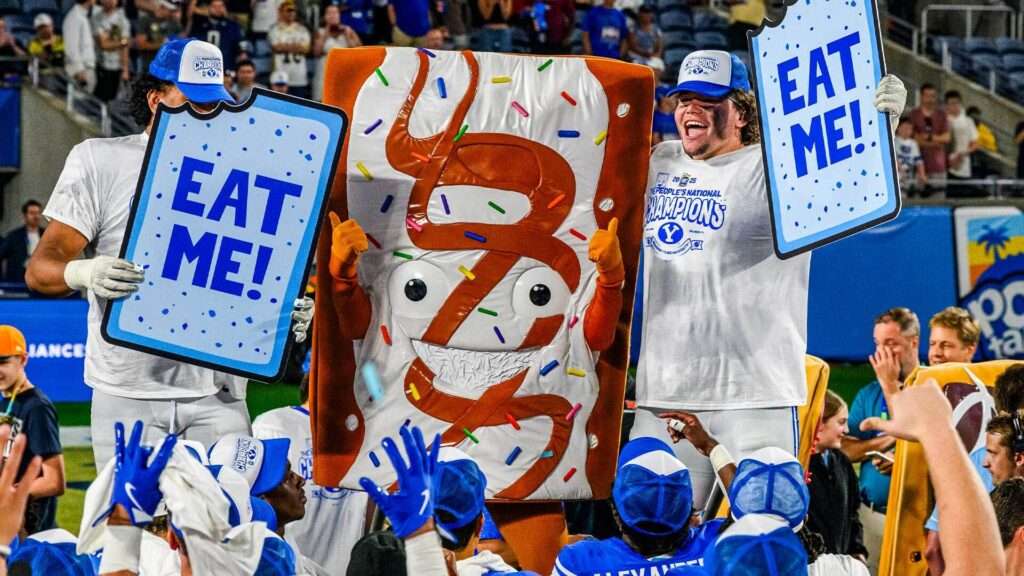
If you love college football bowl season, you can thank capitalism.
The original postseason game, the Rose Bowl, was supposed to help promote the Rose Parade, whose purpose was to promote the superior weather and living conditions in California. Pretty much every new bowl since then was created to boost tourism and business in the host cities—even while some later bowls were created largely to fill up TV windows with bowl-eligible teams, cities are usually happy to host in hopes of getting a marginal bump in tourism and activity. Now that various bowl games are part of the College Football Playoff, the non–playoff bowls that get the most attention are relying more on nongame action to keep viewers interested—with the Pop-Tarts Bowl as the best example, getting 8.7 million viewers this year.
Thru Dec. 27, @ESPNCFB's non-CFP bowl viewership is up 13%, averaging 2.7M viewers with several games reaching multi-year highs
???? @PopTartsBowl | 8.7M viewers⁰???? @PinstripeBowl | 7.6M⁰???? @taxslayerbowl | 6.0M⁰???? @RateBowl | 4.4M⁰???? @LABowlGame | 3.8M⁰???? @FRBowl | 3.1M pic.twitter.com/AH0LfKYINz— ESPN PR (@ESPNPR) January 2, 2026
"The Pop-Tarts Bowl is easily one of my favorite sports events of the year," as Reason sports fan and staffer Natalie Dowzicky told me.
So whether you just love to watch your own team in a bowl or you love to watch as many bowl games as you can, you should thank capitalism for the blessings of bowl season.
Replay of the Week
A comeback, a blocked extra point in overtime, a fourth-down touchdown reception by a guy named Taco, and the final extra point to win it. FCS football is beautiful chaos.
MONTANA STATE WINS THE FCS CHAMPIONSHIP WITH A 4TH-AND-10 TD AND XP IN OT!
An Illinois State XP attempt was blocked earlier in OT.
Dave Flemming and Brock Osweiler with the call for ESPN. ????????????????️ pic.twitter.com/UuEJxEUUcI
— Awful Announcing (@awfulannouncing) January 6, 2026
That's all for this week. Enjoy watching the real game of the week, Michigan State against Northwestern in basketball (for Amy, who was a huge Spartans fan).
