
AI Facial Recognition Didn't Put This Tennessee Grandma in Jail for 6 Months. Bad Policing Did.
Angela Lipps is suing for $10 million after a Fargo police detective ignored evidence that she was innocent and arrested her anyway.
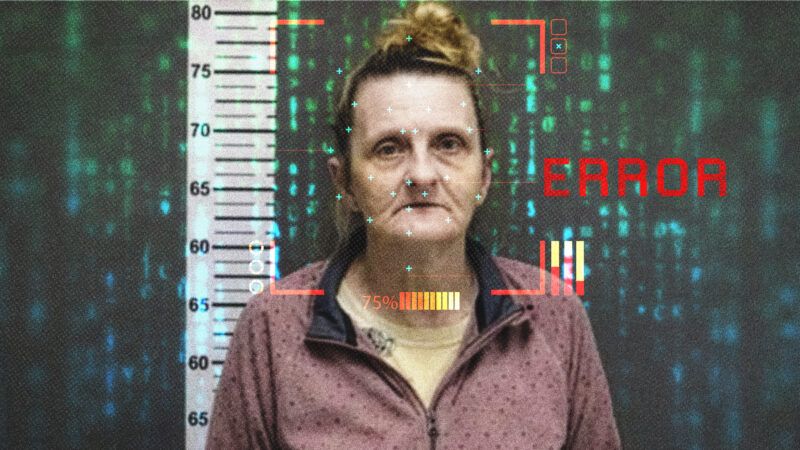
Angela Lipps, a 50-year-old Tennessee grandmother, made headlines last spring after AI facial recognition identified her as a suspect in a bank fraud case halfway across the country. Now, Lipps is suing the City of Fargo and the detective responsible for her wrongful arrest for $10 million.
On July 14, 2025, Lipps was at her neighbor's house to help watch her children when a stranger knocked on the door. Little did she know her life was about to be turned upside down. Her neighbor answered the door and spoke with the stranger, who asked about a lost dog, according to the lawsuit filed in federal court. Immediately after, her neighbor's child remarked that there were people outside with guns.
Lipps looked out the window. About a dozen armed individuals stood outside, shouting for her to come outside with her hands up. Confused and scared, Lipps did not yet know that these were plainclothes members of the United States Marshals Smokey Mountain Fugitive Task Force sent to arrest her. Still, "Lipps walked outside the residence with her hands up," writes the complaint.
Held at gunpoint, terrified she was about to die, and unable to comprehend what was happening, Lipps began hyperventilating and crying. Officers began shouting things about North Dakota as they forced her hands behind her back and told her to "shut the fuck up and stop crying."
The officers took Lipps to the Carter County Detention Center in East Tennessee, where she learned she'd been arrested based on a warrant issued over 1,200 miles away in Fargo, North Dakota. Just two weeks prior, "the State of North Dakota charged Lipps with eight felonies relating to…bank fraud," the most severe of which "had maximum sentences of ten years imprisonment," according to the lawsuit.
But Lipps had never been to North Dakota. There must have been some kind of mistake.
In total, Lipps would spend five and a half months incarcerated for a crime she didn't commit. Without her medication or her dentures, she was unable to sleep and forced to break apart food with her hands to eat, explains the complaint. Months after her arrest, Lipps was flown to the Cass County Jail in Fargo. Without any connections to the area, she was deemed a flight risk and given a $100,000 bond she could not afford. But after presenting bank records showing Lipps was in Tennessee, not North Dakota, during the alleged bank fraud crimes, all charges against her were eventually dismissed. Lipps was finally released on December 24, 2025, only to find "that her residence, car, and personal property were lost" in her absence.
Over a year since her arrest, Lipps is seeking accountability for her near six months behind bars. Lipps' attorneys' investigation into her arrest and prosecution revealed that her social media photo came up as a potential lead after the West Fargo Police Department (WFPD) ran the suspect's fake ID through Clearview AI's facial recognition software, the suit alleges. Clearview AI states that any matches should be considered potential leads only and requires law enforcement to "independently verify by both peer review and other means, before continuing with their investigation."
When WFPD followed up on the lead, investigators found that Lipps did not physically match the suspect caught on multiple surveillance videos: her build was different, and so were her facial features and tattoos. Furthermore, Lipps had no connection to bank thefts or unexplained funds. After finding no additional evidence linking her to the crimes, the WFPD declined to press charges against Lipps and "understood that the facial recognition results themselves were insufficient to support probable cause," according to the complaint.
But after sharing the Clearview AI results with the Fargo Police Department (FPD), the lawsuit alleges that Detective Lucas Heck believed otherwise. Based on nothing more than a Clearview AI match based on a fake ID, Heck "misrepresented the facial recognition results and omitted material exculpatory information and his failure to corroborate Lipps's connection to" the crimes, the suit argues. And in doing so, "Heck acted maliciously and in deliberate disregard to Lipps rights" when he requested Lipps' arrest warrant.
"The problem is essentially old," Lipps' lawyer told WKRN, a Tennessee news station. "It's an officer not doing the legwork that is typically expected." And while $10 million is a significant number, Lipps' lawyer said "it reflects the specific harm that happened to [Lipps]….Can you imagine being taken away at gunpoint, held in detention, taken from your family?"
During a time of fierce public debate over AI and surveillance technology, Lipps' story serves as a stark reminder that without proper police accountability, tech reform might not be enough to protect our constitutional rights.