
Kids Are Using NPR Podcast Comments as Secret Group Chats
Teenagers barred from social media are turning obscure corners of the internet into makeshift chat rooms.
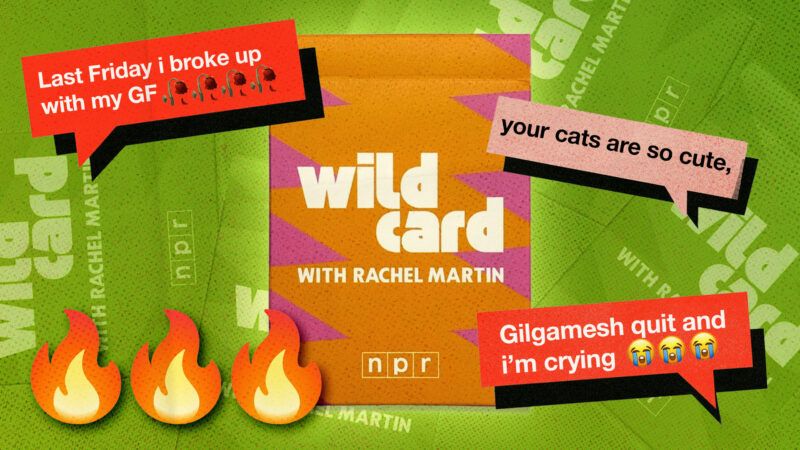
Some teens have been using the comments section of an NPR podcast as a group chat to communicate with one another.
Ella, 14, is not allowed on social media. She is, however, allowed on Spotify. She and about 20 friends, most of whom were girls with parents who didn't let them on social media, decided to communicate with one another by creating playlists on Spotify, naming them something along the lines of "chat here," adding one podcast, and telling their friends to chat in the comments.
When asked why they chose NPR shows to chat under, Ella said that they "just looked for podcasts that didn't have many comments." Ouch.
The discovery was made by Dave Blanchard, who runs NPR's Wild Card and keeps an eye on the comments that people post about the show. Last year, he noticed new comments on an episode: "Gilgamesh quit and I'm crying," "Last Friday I broke up with my GF," "Your cats are so cute," "You're gorgeous in that dress. OML, pink heart."
The comments seemed like "gibberish" to Blanchard, who told This American Life that he thought the accounts were bots. "They're just these clipped, weird, incoherent postings," he said. "But the fact that they were all from different accounts seemed very weird. And the fact that they also maybe seemed to be interacting in some way also seemed weird and not like typical bot behavior."
After assuming they were bots, Blanchard deleted the comments, but then noticed new ones pop up. One account said that their comment was deleted. "That felt very strange that a bot would be able to recognize that the thread got deleted and post it, letting people know that it had been deleted," Blanchard told This American Life.
He decided to investigate further. After posting some screenshots to NPR's Slack, his Gen Z colleague "almost immediately" recognized that "these are kids," partly because of the display names, some of which contain special character emojis.
Teens want to communicate with other teens—and are incredibly resourceful in making that happen. Indeed, this is not the first time that children have been found using the comments section as their very own reinvented chat room where adults won't think to look.
In October 2025, Fiona Geiran, who works on NPR's TED Radio Hour, made a similar discovery. "So one of my responsibilities on my team is to monitor our Spotify comments," she told the How To Do Everything podcast. "And for the most part, we mostly get really, like, nice comments or people engaging with our content, giving constructive feedback or saying how much they liked it. But about three weeks ago, I noticed kind of a different floodgate situation. And the first instance was only about 20 comments."
The comments were similar. Geiran described them as a lot of "You're so pretty," "No, you're so pretty." She began to question why an episode published three years prior would suddenly spark a discussion about beauty.
It turned out, Geiran suspects, that the comments were from kids. "Maybe this is just a way to get around a classroom phone-free situation," said Geiran. "Maybe they can have their laptops out, but they can't have Instagram open, or Spotify is the only thing they're allowed to have."
Of course, kids have found workarounds to social media bans. In 2019, The Atlantic reported that middle and high schoolers were using Google Docs to speak to their peers.
With social media bans for minors catching on across the world (Australia, Canada, Malaysia, and the United Kingdom, to name a few), there is an obvious lesson here: Kids adapt and get around bans. In Australia, the first country to introduce a ban on social media for those under the age of 16, around 70 percent of children who already had accounts on Instagram, Snapchat, TikTok, or Facebook still had them after the ban went into effect.
Kids want to communicate with one another, and they are remarkably good at turning whatever corner of the internet that remains available into a social space of their own. Perhaps lawmakers ought to give them more credit.