
Trump's Illegal Tariffs Are Finally Being Refunded. Will You Get Any of the Money?
The burden of Trump's illegal tariffs was spread across the American economy. The refunds likely won't cover all those costs.
The Trump administration is finally, slowly, beginning the process of refunding the illegal tariffs it collected over the past year, and some private companies say they will speed those refunds along to consumers.
In theory, this is a straightforward act of restitution. In practice, it reveals a more complicated—and, for many consumers, likely less satisfying—truth about tariffs.
This week, U.S. Customs and Border Protection (CBP) opened a new online portal to allow companies to submit tariff receipts and request refunds. Those refunds are required because the U.S. Supreme Court ruled in February that the Trump administration did not have the legal authority to impose tariffs under the International Emergency Economic Powers Act (IEEPA), which Trump used to levy his so-called "Liberation Day" tariffs last year.
In a statement, the CBP said importers and brokers should expect to see tariff refunds issued within 60 to 90 days, though in some circumstances the process will take longer.
For now, not all imports that paid IEEPA tariffs are eligible for refunds. This first "phase" of the refunds will apply only to goods that have not yet fully completed the duty-paying process. In March, the Trump administration told the Court of International Trade that this would cover about 63 percent of all imports for which IEEPA duties were paid. Everyone else will have to wait.
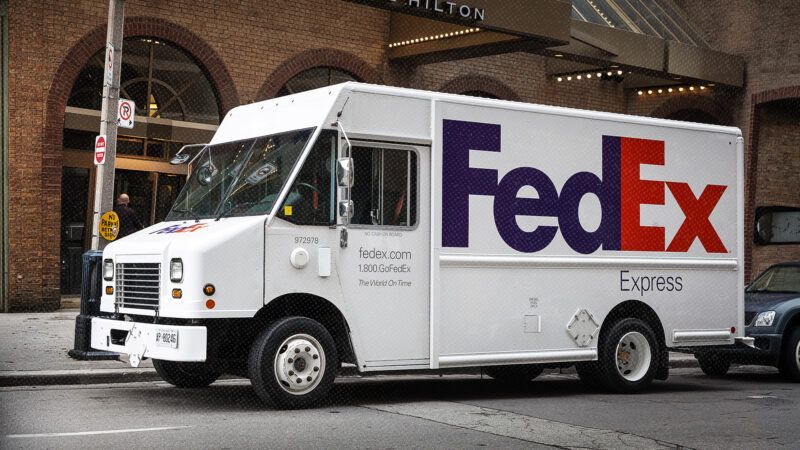
It might take months for the government to issue those refunds, but UPS, FedEx, and other delivery companies have already set up a process to refund their customers.
"Our intent is straightforward: if refunds are issued to FedEx, we will issue refunds for IEEPA tariffs paid to the shippers and consumers who originally bore those charges," FedEx said in a statement.
Meanwhile, UPS says it will "work to request and retrieve IEEPA tariff refunds from CBP on our customers' behalf" and will then "issue refunds to the payors."
Despite that, many consumers will likely be left out. That's because of the nature of how tariffs work and the limitations of any attempt at refunding those illegally collected taxes.
Even though it was American businesses who paid the bill for the Trump administration's tariffs, those tariffs were ultimately a tax on consumers. There is a sizable body of evidence showing that businesses passed along the cost of the tariffs in the form of higher prices. A paper published in February by economists from the Federal Reserve and Columbia University, for example, showed that Americans are paying 94 percent of the tariffs' costs and that goods subject to tariffs increased in price by 11 percent more than goods not subject to tariffs.
In short, the burden of Trump's illegal tariffs was spread across the American economy. The refunds, however, can legally go only to the importers of record—those who paid the bill in the first place.
Beyond FedEx and UPS, other businesses are trying to find ways to compensate their customers. Like the costs of the tariffs, those refunds will likely be dispersed in indirect ways. Ron Vachris, CEO of Costco, said in March that the company would try to pass along any tariff refunds in the form of lower prices. But he also warned that "the complexity of the tariffs…made it challenging to track the exact impact to an individual item sold."
For American businesses, that complexity is not going away just because the Supreme Court struck down the IEEPA tariffs. The Trump administration quickly replaced those tariffs with another set of (probably also illegal) tariffs under the Trade Act of 1974, and the White House has begun the process of imposing yet more tariffs under other legal authorities.
Earlier this week, Trump said the new tariffs would "end up with bigger numbers, actually." He's also encouraged businesses not to seek refunds for the illegal IEEPA tariffs.
In that environment, with businesses already bracing for another round of tariff costs, consumers are even less likely to see any relief.
It's good that the Trump administration finally got its tariff-refund portal up and running. Refusing to refund those illegally collected taxes would have been theft. Still, for the millions of Americans who ultimately bore the economic burden of the tariffs, relief will be indirect or nonexistent.