
Justice Department Drops 23,000 Cases To Make Room for Trump's Immigration Crackdown
The agency refused to prosecute alleged national security, labor, and white-collar crime while increasing immigration cases, a new report finds.
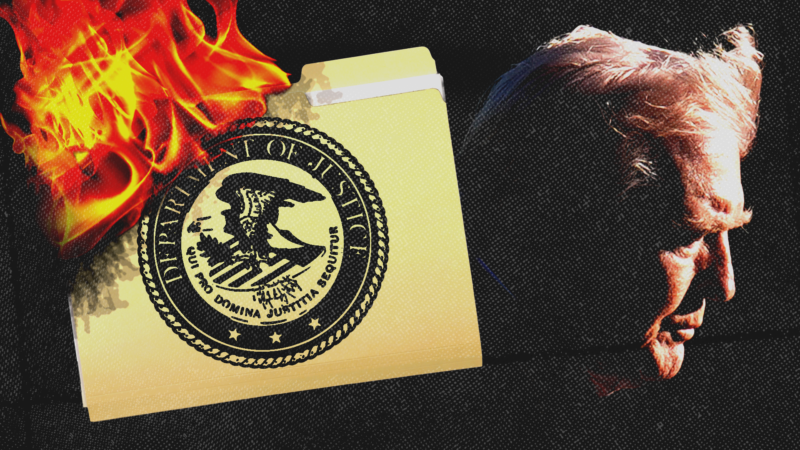
In the first six months of President Donald Trump's second term, the Department of Justice (DOJ) has closed over 23,000 criminal cases while shifting resources to immigration, according to a new ProPublica analysis. The majority of these cases, the analysis found, were closed without prosecution, further calling into question the Trump administration's commitment to the rule of law.
In February 2025, within weeks of Attorney General Pam Bondi being sworn in, the DOJ declined to prosecute nearly 11,000 cases, ProPublica found. The number of declined prosecutions is higher than any other month as far back as 2004 and is nearly double the previous high of around 6,500 declined cases during Trump's first term in September 2019.
When compared to the average of the last three administrations, ProPublica found that the second Trump administration has refused to prosecute more cases across a wide variety of crimes. Interestingly, crime categories with above-average declinations include areas that Trump has often spoken of as high priorities for his administration, including a 45 percent increase in dropped drug cases, a 59 percent increase in dropped white-collar crime cases, and a 93 percent increase in dropped national security cases.
The one area in which ProPublica found that the DOJ took on more cases than the last three administrations was immigration. During the first six months of Trump's second term, the agency declined to prosecute 22 percent fewer immigration cases than average and prosecuted 32,000 new immigration cases, almost three times the number under the Biden administration and a 15 percent increase compared to Trump's first term.
Although the DOJ routinely declines to prosecute cases for a variety of reasons and makes policy changes to reflect differing priorities between administrations, the report suggests that the extent of declined cases and priority overhaul is unprecedented. In a statement to ProPublica, a DOJ spokesperson said the number of declined cases is due to "an effort to clean, remediate, and validate data in U.S. Attorney's cases management system," and that the agency "remains committed to investigating and prosecuting all types of crime to keep the American people safe." At the time of publication, the DOJ had not responded to Reason's request for comment.
But critics of the recent DOJ changes, including 295 former employees, say the agency is no longer fulfilling its mission "to uphold the rule of law, to keep our country safe, and to protect civil rights." Although the shift to focus on immigration is unsurprising given Trump's ongoing and unpopular immigration crackdown, the administration's decision to trade off against prosecuting other major crimes is perplexing, particularly as state law enforcement agencies are also being incentivized to focus their limited time and resources on immigration enforcement.
Data have repeatedly debunked the Trump administration's claim that it is arresting and detaining "the worst of the worst criminal illegal aliens." According to an analysis by the Cato Institute, a libertarian think tank, only 5 percent of immigrant detainees from October to mid-November of last year had a violent criminal conviction, and 73 percent had no criminal conviction at all. Similarly, the Transactional Records Access Clearinghouse found that nearly 74 percent of over 68,000 immigrants detained in early February had no criminal convictions.
Of course, Trump is not the first president to shift the priorities of federal law enforcement. Several presidents, for example, have chosen to more strictly enforce drug laws, a tactic that has fallen well short of its intended aim. But just as empowering the government to go after drug crimes has hurt civil liberties and failed to make Americans safer, Trump's immigration crackdown is having the same effect.