
Oklahoma Ends Indefinite Death Row Solitary Confinement
“These men have not been able to touch grass and feel the warmth of the sun for the first time in ten years.”
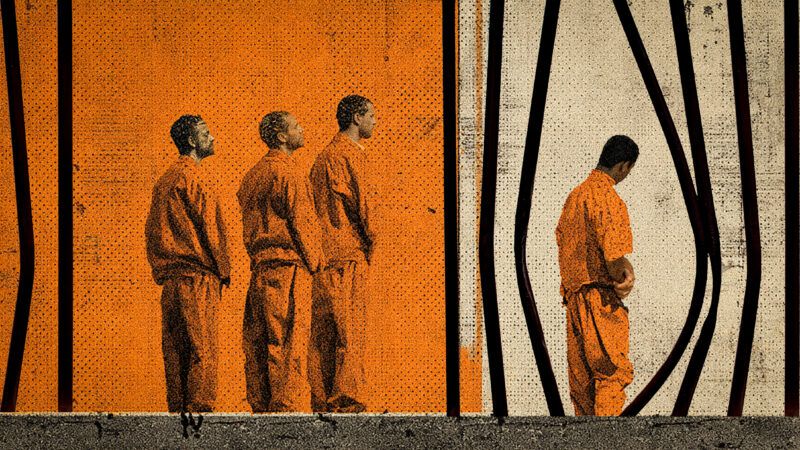
Every year, thousands of prisoners in the U.S. are placed in solitary confinement, where they endure isolation, abuse, and mental suffering. This practice might soon become rarer for some inmates in Oklahoma, thanks to the efforts of activists in the state.
Earlier this month, the American Civil Liberties Union (ACLU) of Oklahoma announced that the Oklahoma State Penitentiary in McAlester had ended the practice of indefinite solitary confinement for "the vast majority" of death row prisoners.
The ACLU's advocacy on this effort began in 2019, when the organization, along with the National Prison Project and other advocacy groups, investigated conditions at the prison's H-Unit, which houses men on death row. The prison's H-Unit opened in 1991 and quickly drew attention from Amnesty International for its inhumane conditions, including the use of automatic solitary confinement for people on death row and a lack of natural light and air in cells, which produces a burial-like confinement. Despite these findings, practices at H-Unit continued.
In 2019, the ACLU sent a letter to the state Department of Corrections demanding changes. In the letter, the group outlined "unconstitutional policies and practices" at H-Unit, which "subject [prisoners] to dangerous and injurious conditions." Indeed, men on death row are automatically sentenced to this unit, where they are indefinitely confined to their cells for 22 to 24 hours per day and are only offered 15 minutes to shower three times per week, according to the ACLU. Meanwhile, their one hour (if that) of exercise time per day is confined to a cell of similar dimensions to the one they spend most of their time in.
Meanwhile, the construction of the unit, which is mostly concrete with no windows to the outside world, is built in a way that "effectively constitute[s] a dim underground bunker." This manufactured isolation is evident in the prison's policies on human contact; any visits with other human beings are non-contact, including when they speak to mental health professionals, which happens through the hole in their cell door. Visits they get with loved ones are through plexiglass, using a telephone. One prisoner described this experience as being "buried alive."
Religious freedoms are also violated within H-Unit. When the cell block first opened, prisoners were allowed to worship communally (albeit in chains and handcuffs) twice per month. This changed in 2009 when the warden of the prison at the time banned religious congregating for all death row inmates. This policy, as the ACLU pointed out in 2019, violated federal law that protects the religious freedoms of the incarcerated.
These policies have had an indelible effect on prisoners in H-Unit. From 2012 to 2015, "nine prisoners at OSP-McAlester died by suicide, giving the prison the highest suicide rate in the state, six times higher than the prison with the second highest rate," according to the ACLU.
Rather than filing a lawsuit to remedy the situation, the ACLU entered into negotiations with the state, which have yielded positive results: several men on death row have been transferred to A-Unit, where they enjoy outdoor yard time, jobs, religious ceremonies, and contact visits from family members. "Many of these men have been able to touch grass and feel the warmth of the sun for the first time in ten years," said Megan Lambert, legal director of ACLU Oklahoma, in a press release. "One man was able to hold his grandchild for the first time."
By outlawing indefinite solitary confinement for death row inmates, Oklahoma joins states like Hawaii, Connecticut, and New York, which have ended this practice in recent years. Some prisoners remain in H-Unit, but thanks to the efforts of these organizations, more people will be able to enjoy their basic, constitutionally protected rights.