
One Ring To Ruin Them All
Anti-crime zones hurt innocents instead of protecting them.
A Jersey City ordinance that takes effect on December 11 bars sex offenders from living within 2,500 feet of a school, day care center, park, playground, sports facility, library, theater, or convenience store. These zones cover the entire city.
As a result of the federal Gun-Free School Zones Act, you can't legally transport a firearm in Phoenix unless you have a carry permit or keep it locked and unloaded. In New Haven the only substantial piece of land not covered by a drug-free zone is the Yale University golf course.
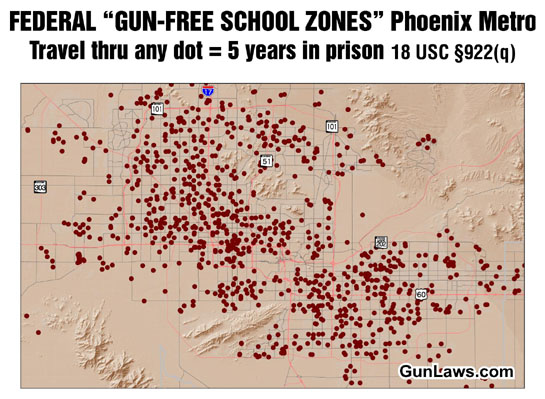
Across the country, politicians are eager to draw magical circles of protection they claim will banish evil and keep children safe. It's an easy, cheap way of opposing what everyone opposes and supporting what everyone supports. But the resulting crazy quilt of drug-free, gun-free, and molester-free zones is ineffective, sometimes counterproductive, and frequently unjust.
Consider the Georgia woman who was labeled a sex offender because she performed fellatio on a 15-year-old when she was 17. Last year she had to move because she was too close to a day care center. Now she and her husband may have to move again because they're too close to a school bus stop, a location added to the state's list of restrictions in April.
Georgia's law, which has been challenged in federal court, also would exile all 490 registered sex offenders in DeKalb County, mostly men who as teenagers had consensual sex with younger girls. It even applies to sex offenders dying in nursing homes.
Other states have narrower laws, but police and prosecutors still worry that onerous restrictions on where sex offenders may live will push them onto the streets or discourage them from complying with registration requirements, making them harder to track. Critics of the laws also note that something like 90 percent of molesters victimize relatives or other children they already know, the sort of situation where zones are irrelevant.
Even when sexual predators are strangers, there's nothing to stop them from roaming beyond their immediate neighborhood. "We don't see any evidence of a connection between where a person lives and where they might offend," the executive director of the Iowa County Attorneys Association recently told The New York Times. An official at the National Center for Missing and Exploited Children warned that "these laws may give a false sense of security."
The same can be said of the gun-free school zones designated by state and federal laws. They are not likely to deter anyone bent on violence. Worse, they advertise that all the law-abiding people at a school are unarmed and therefore easy prey.
The victims of such laws also include innocent gun owners who are transformed into felons when they unwittingly traverse a school zone on the way to target practice or hunting grounds. The gun control analyst Alan Korwin warns that the 1,000-foot limit set by federal law subjects millions of Americans to a five-year prison term simply for venturing out of their homes with their guns.
Drug-free zones, which trigger enhanced penalties for drug dealing or possession within a certain distance (usually between 500 and 1,500 feet) of locations such as schools, parks, and day care centers, likewise mainly affect people other than their official targets. Ostensibly aimed at protecting children, they typically boost prison sentences for drug offenses that involve only adults.
A December 2005 report from New Jersey's sentencing review commission found that students were involved in only 2 percent of cases where drug-free zones were invoked. Because they cover so much territory, the zones have become an excuse for harsher punishment rather than a deterrent to selling drugs near minors.
It's doubtful that zoning laws like these have ever or will ever protect a single child from drug addiction, gun violence, or sexual assault. But they do give children a valuable lesson in the hazards of political grandstanding.
© Copyright 2006 by Creators Syndicate Inc.