
Ranking the Worst Supreme Court Decisions of All Time
What cases belong on the list?
When Reason magazine celebrated its 50th anniversary back in 2018, I helped mark the occasion with a column about "the 5 worst Supreme Court rulings of the past 50 years," a list that featured destructive and far-reaching decisions on issues ranging from qualified immunity to eminent domain.
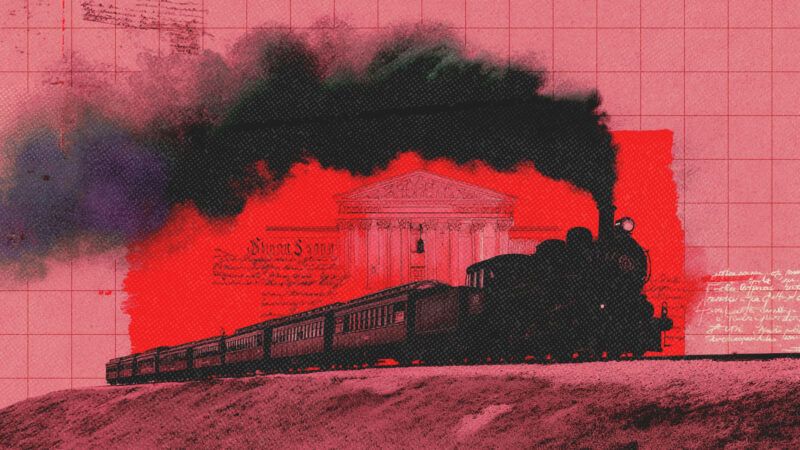
I got to thinking about that list when I noticed that yesterday was the 130th anniversary of one of the worst Supreme Court rulings of all time, the Court's notorious decision in Plessy v. Ferguson (1896), which upheld a Louisiana law that forbade railroad companies from selling first-class tickets to black passengers. The Supreme Court purported to justify this obvious violation of liberty on the grounds that "the competency of the state legislatures in the exercise of their police power" should not be subjected to meddlesome second-guessing by the judiciary.
Plessy is the case, of course, which enshrined the notorious pro-Jim Crow doctrine of "separate but equal," a doctrine that stood as the law of the land until the Supreme Court finally reversed course in Brown v. Board of Education (1954). Plessy thus surely belongs at or near the top of any list of the worst SCOTUS decisions ever made.
What else should be on there?
You’re reading Injustice System from Damon Root and Reason. Get more of Damon’s commentary on constitutional law and American history.
Dred Scott v. Sandford (1857), which said that black Americans "are not included, and were not intended to be included, under the word 'citizens' in the Constitution," also clearly belongs in the hall of shame. Indeed, the legal and intellectual travesty of that ruling was exposed in real time via the dissenting opinion of Justice Benjamin Curtis, who pointed out:
At the time of the ratification of the Articles of Confederation, all free native-born inhabitants of the States of New Hampshire, Massachusetts, New York, New Jersey, and North Carolina, though descended from African slaves, were not only citizens of those States, but such of them as had the other necessary qualifications possessed the franchise of electors, on equal terms with other citizens.
This means that when the U.S. Constitution came up for ratification in 1787–1788, a number of black Americans were literally among "the people" who "ordained and established" the document by participating in its ratification as lawful electors in the above-named states. Dred Scott's pro-slavery holding ignored this clear historical evidence and trampled on the actual events of the founding.
Another awful Supreme Court decision that should be included in our parade of horribles is Korematsu v. United States (1944), which upheld President Franklin D. Roosevelt's wartime internment of innocent Japanese-American citizens. You will probably not be surprised to learn or recall that this blatant violation of civil liberties was justified by the Supreme Court on the all-too-familiar grounds that the executive branch is entitled to receive broad judicial deference during an emergency.
Much like what happened in Dred Scott, the flaws of the Korematsu judgment were also exposed in real time by a dissenting member of the Court. "It is essential that there be definite limits to military discretion, especially where martial law has not been declared," protested Justice Frank Murphy. "Individuals must not be left impoverished of their constitutional rights on a plea of military necessity that has neither substance nor support."
Now it's my turn to ask you, the readers, to weigh in with your own votes. What other cases belong on the list of the worst SCOTUS decisions of all time? Email me at injusticesystem@reason.com. Also, if you'd like to subscribe to this newsletter (it's free), you can sign up right here. Perhaps The Slaughter-House Cases (1873), which gutted the 14th Amendment's Privileges or Immunities Clause? Or what about Buck v. Bell (1927), which upheld a state eugenics law that permitted the forced sterilization of the "feebleminded and socially inadequate"?
If enough votes are cast, I'll discuss the results in a future newsletter.