
Trump vs. Scalia on Sanctuary Cities and the Minneapolis Immigration Crackdown
Plus: Why is the Supreme Court’s tariff decision taking so long?
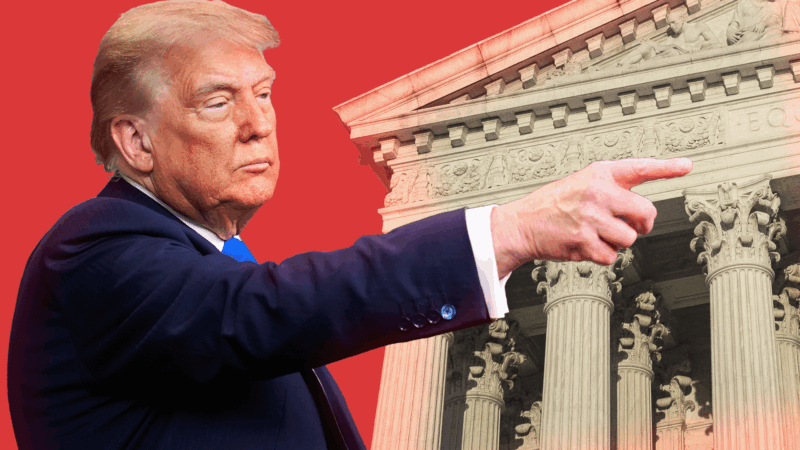
According to President Donald Trump, Minneapolis Mayor Jacob Frey endorsed "a very serious violation of the Law" last week when Frey said that "Minneapolis does not, and will not, enforce federal immigration law."
But it is Trump whose understanding of the law is seriously impaired. Under both constitutional principle and judicial precedent, state and local authorities may decline to participate in the enforcement of a federal regulatory scheme. So-called sanctuary city policies that either limit or prohibit local enforcement of federal immigration law are themselves lawful.
Why? Just ask the conservative legal hero Justice Antonin Scalia.
You’re reading Injustice System from Damon Root and Reason. Get more of Damon’s commentary on constitutional law and American history.
"The Federal Government may neither issue directives requiring the States to address particular problems," Scalia wrote in the 1997 Supreme Court case of Printz v. United States, "nor command the States' officers, or those of their political subdivisions, to administer or enforce a federal regulatory program."
The Printz case centered on a provision of the 1993 Brady Handgun Violence Prevention Act that required state and local police to enforce federal gun control laws. But such "federal commandeering of state governments," Scalia held, violated the constitutional principles of federalism that were safeguarded by the 10th Amendment.
Trump's attack on Frey thus runs counter to the Scalia-penned precedent elucidating the anti-commandeering doctrine. In this matter, the 10th Amendment trumps Trump.
In Other Legal News
Do you like April Fool's Day jokes? Me neither. So here's one for you anyway: The U.S. Supreme Court has announced that it will hear oral arguments on April 1 in the case about Trump's executive order purporting to deny the constitutional guarantee of birthright citizenship to millions of U.S.-born children. It's a fitting date, I suppose, since Trump is trying to make a laughingstock out of the original meaning of the Fourteenth Amendment.
The continuing silence from the Supreme Court about the fate of Trump's tariffs has led to worrying speculation among some of the president's critics that the longer it takes for the Court's tariffs decision to come out, the better it is for the White House. Writing in The Washington Post, for example, Jason Willick argues that while "Trump is the underdog" in the legal dispute, "the longer the case drags on without resolution, the less likely it is that the president got licked." Willick bases this fretful view on the idea that "the longer a status quo stays in place, all else being equal, the less likely the Supreme Court is to disturb it." And Trump's tariffs, needless to say, have now been in place for some time.
On the other hand, as Amy Howe points out at SCOTUSblog, there are plausible reasons to think that "even if the justices do strike down some or all of the tariffs, that might still not be enough to spur them to issue an opinion soon." For instance, Howe notes, a ruling against Trump could still "leave the question of refunds for the lower courts, in which case—at least in the justices' view—an additional month or two to finalize their ruling might not make much of a difference." Alternately, she adds, the justices could also "decide that the tariffs are invalid but hold either that they will not apply going forward (ruling out refunds for tariffs that had already been paid) or delay the implementation of their ruling, giving Congress time to enact a solution."
Either way, as the unsung legal philosopher Tom Petty might have put it, waiting for SCOTUS "is the hardest part."