
Loudon County Is the Data Center Capital of the World. Now It's Paused Building New Ones.
Data centers have cut residents’ tax rates and funded schools. Loudoun’s board paused new approvals anyway.
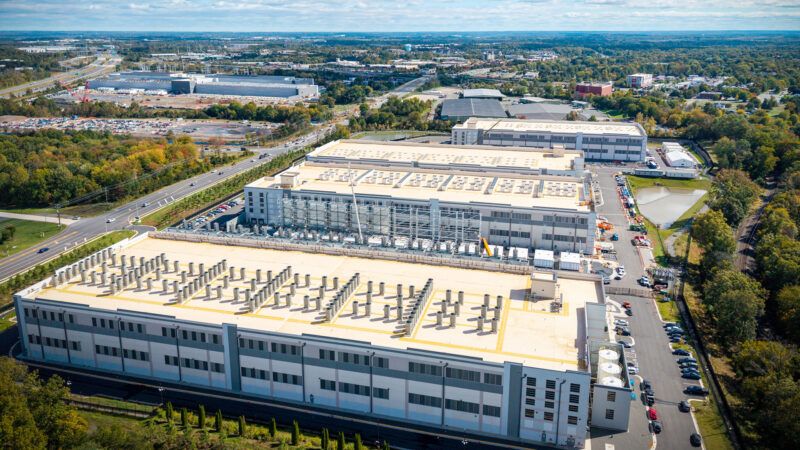
The nationwide data center backlash has reached the industry's home turf. On Tuesday night, the Board of Supervisors for Loudoun County, Virginia—the data center capital of the world—voted to pause approval for new data center projects for the next 10 months. The pause was passed in a 7–1 vote, with one supervisor abstaining.
The measure will halt board approval for new data center and substation applications potentially until next September while the county develops new rules. Projects in the Route 28 tax district, a special commercial tax district in eastern Loudoun, are exempt. In the meantime, pre-approved projects can continue.
The vote comes amid mounting concerns from residents over developments near residential areas, noise disturbances, air quality, and impacts on the electrical grid. "The fact of the matter is that this development of data centers has moved a lot faster than the board has been able to respond," said Supervisor Juli Briskman, who proposed the pause, according to reporting from Bisnow. "And we did have a lot of missed opportunities to respond and get this under control, as our constituents have been begging us to do, and this is a golden opportunity to do that tonight."
Loudoun County has the highest concentration of data centers in the world, with around 233 of these facilities already up or under construction. As industry advocates pointed out during the meeting, this has brought immense economic benefits to the county. According to county data, data centers are expected to generate around $1.3 billion in tax revenue in FY 2027. Data center revenue alone is expected to make up roughly 40 percent of the county's total budget.
This revenue has contributed to a steady decrease in the county's real property tax rate over the past decade. The rate has fallen to $0.805 per $100 of assessed value from $1.145 in 2016, making it the lowest rate in northern Virginia, according to the county. At the same time, the county increased funding for the school system by $105 million this year, thanks in large part to data centers.
Board Chair Phyllis Randall, who voted in favor of the pause, acknowledged the economic benefits, but stressed that her duty to her constituents comes first. "I'm also an elected official, and I'm supposed to move to some degree with the constituents, so when constituents have switched, I'm not supposed to just say well three years ago you weren't saying that so I'm not going to do anything different," she said, according to reporting from local CBS affiliate WUSA9.
Not everyone on the board was so convinced. Supervisor Caleb Kershner, who abstained from the vote, had some choice words for the measure. "This, ladies and gentlemen, is a pure political vote to try to win votes," he said. "This is really bad governance to do it this way. We expose ourselves to litigation." He argued that if developers successfully challenge the resolution in court, it could cost the county big time, citing a potential estimate of up to $60 million in legal costs. Even though he called the pause "legally defensible," the county attorney echoed Kershner's warnings about the potential threat of litigation.
Despite their benefits, data centers have recently faced staunch opposition from local communities in the United States. On election night, localities across the country considered at least 40 ballot measures to rein in the industry, most of which passed. In the third quarter of 2026, construction of these facilities slowed down for the first time in a year, according to Cleanview, a data center research firm.
Now, Loudoun County, which has felt the benefits of data centers firsthand arguably the most in the country, has voted to slow down the industry. If the data center capital of the world is having second thoughts, this could spell even more trouble for the rest of America's AI buildout.