
Review: The Outer Worlds 2 Is a Video Game About Unchecked Corporate Power
The video game's anti-corporate satire is so over the top that it undermines its point.
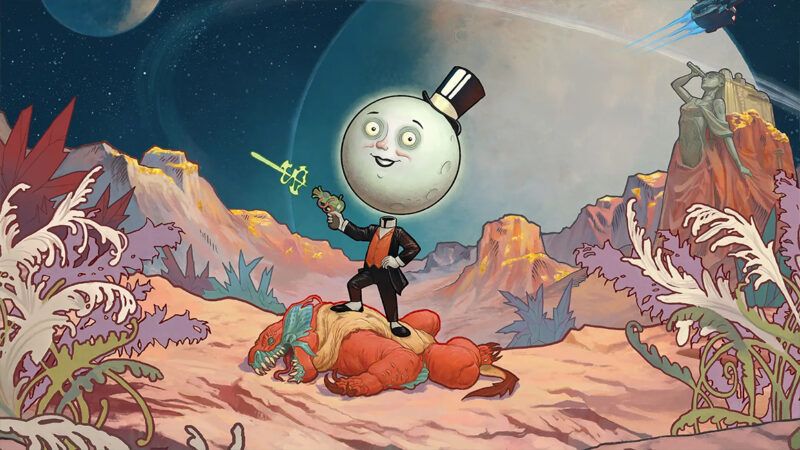
In The Outer Worlds 2, everything goes back to antitrust. Like the first game in the series, this first-person shooter is set in the far future in an alternate timeline in which William McKinley was not assassinated. As a result, Theodore Roosevelt was never president and the trustbusting of America's early 20th century never happened. The result, in the game's alternate timeline, is a future defined by sprawling mega corporations of almost comical scope and power.
The game plays its corporate-controlled scenario for winks and laughs, extrapolating and exaggerating the power of unregulated corporations as they reach into space via interstellar colonies. The first game featured a war between a home goods company called Auntie Cleo's and a colonial supply company called Spacer's Choice. In the post-war sequel, they've merged into an even more powerful entity, Auntie's Choice.
The game's satire of corporate rule is often funny. But it's so over the top that it undermines its point: In the game world's dystopia, corporate control is so complete and inescapable that it functions like authoritarian government power. Turns out that's what everyone dislikes.