
Ring Drops Controversial Partner After Super Bowl Ad Backlash
The move is a rare win for privacy, both for users and their neighbors.
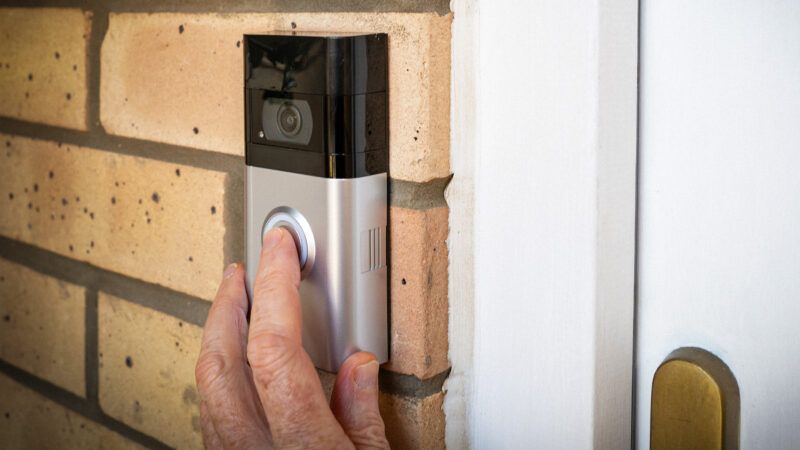
Ring, the Amazon-owned company that makes video doorbells and other home security devices, aired its first Super Bowl ad this year. As Reason reported, the commercial's intent was to advertise a new feature, but it caused a backlash given the company's track record of privacy violations.
Within days, Ring announced it would terminate its partnership with Flock Safety, which makes products like automated license plate readers that are used by law enforcement. The move is a rare win for data privacy.
The commercial advertised Search Party, a feature that allows users to upload a picture of a lost dog, which Ring cameras will then monitor for using AI. While the sales pitch is perfectly wholesome and heartwarming, there are serious privacy implications.
"In the ad, disguised as a heartfelt effort to reunite the lost dogs of the country with their innocent owners, the company previewed future surveillance of our streets: a world where biometric identification could be unleashed from consumer devices to identify, track, and locate anything—human, pet, and otherwise," writes Beryl Lipton of the Electronic Frontier Foundation. "People need to reject this kind of disingenuous framing and recognize the potential end result: a scary overreach of the surveillance state designed to catch us all in its net."
Part of the controversy stemmed from Ring's history of partnering with law enforcement and security companies. For years, Ring supplied police departments with free or discounted Ring video doorbells to give away. Some agreements required police to conduct "outreach efforts…to encourage adoption" of Ring products and software.
Police in these communities could then easily request footage from Ring users, who could approve or deny the request. But Ring also regularly furnished police with footage in response to "emergency" requests through its website—bypassing not only the user but the need for a warrant. The company ended this feature in 2024, but less than two years later, it partnered with Flock Safety, which CNBC noted at the time "works with an estimated 6,000 communities and 5,000 law enforcement agencies." The partnership would allow Ring users in those communities to more easily share footage requested by their local police department.
Like Ring, Flock has a poor history of privacy. Police in California repeatedly shared data from Flock license plate readers with federal agents, in violation of state privacy law.
In response to accusations that the company would share footage with U.S. Immigration and Customs Enforcement (ICE), both Ring and Flock denied working with any federal agencies and said they only work with local police. But local police departments throughout the country have routinely searched Flock's database on ICE's behalf.
This week, amid backlash, Ring terminated its partnership with Flock.
"Following a comprehensive review, we determined the planned Flock Safety integration would require significantly more time and resources than anticipated," Ring announced Thursday. "As a result, we have made the joint decision to cancel the planned integration. The integration never launched, so no Ring customer videos were ever sent to Flock Safety."
Of course, Ring's explanation is almost certainly an excuse made in an attempt to save face. After all, note the announcement's timing, just four days after the company aired an ad that over 120 million people saw and that many voiced their concerns about. But regardless of the motivation, Ring users and their neighbors can breathe a sigh of relief, as it may have just gotten a little more difficult for police to access their data without a warrant.