
Yale Journal on Regulation Symposium on the 20th Anniversary of Kelo v. City of New London
I co-edited the symposium along with Eric Claeys and David Schleicher, and am also one of the contributors.
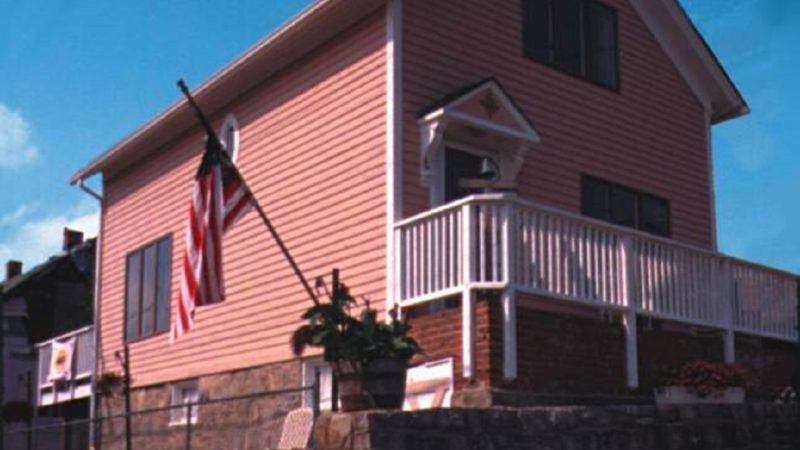
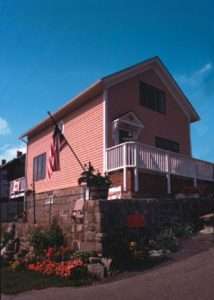
This year saw the twentieth anniversary of Kelo v. City of New London, one of the most controversial property rights decisions in the history of the Supreme Court. Although the Fifth Amendment only permits the taking of private property for "public use," the Court ruled that the transfer of condemned land to private parties for "economic development" is permitted by the Constitution. Building on earlier decisions such as Berman v. Parker (1954), a closely divided 5-4 majority ruled that virtually any potential benefit to the public qualifies as a "public use."
The Yale Journal on Regulation sponsored a symposium to mark the occasion, which I organized and co-edited along with legal scholars Eric Claeys (George Mason University) and David Schleicher (Yale). The articles in the symposium are now published and are available online at the journal's website. Contributors include attorneys on both sides of the Kelo case, and leading takings and property law scholars such as Richard Epstein, Tom Merrill, Maureen Brady, Vicki Been and Yun-Chien Chang, Gerald Dickinson, and more. Eric Claeys and I also contributed articles, in addition to our role as editors.
The other editors and I have written an Introduction for the symposium, which summarizes the significance of Kelo, and provides a brief overview of the symposium articles.
My contribution to the symposium (also available on SSRN), is "Public Use, Exclusionary Zoning, and Democracy." Here is the abstract:
The twentieth anniversary of Kelo v. City of New London is a good opportunity to consider the broader significance of public use for constitutional theory, and to explore parallels between the "public use" issue at stake in Kelo and another major issue in constitutional property rights under the Takings Clause: exclusionary zoning. This Article takes up that challenge. Part I highlights the strikingly similar history of the two issues. In both cases, there is a strong originalist argument that the policy in question—private-to-private condemnations in one case, exclusionary zoning in the other—violates the property-rights provisions of the Fifth Amendment. But, on both issues, the Supreme Court and federal courts generally have taken a highly deferential approach since the rise of Progressive and New Deal Era skepticism of property rights. Part II outlines reasons why that conventional wisdom is wrong. Judicial deference on both public use and exclusionary zoning has greatly harmed the poor and disadvantaged, particularly racial minorities. Moreover, stronger judicial review can actually further "representation-reinforcement" in two ways: by giving voice to groups excluded from the political process, and by empowering them to "vote with their feet." Finally, Part III highlights synergies between judicial enforcement of public-use limitations on eminent domain and enforcement of restrictions on exclusionary zoning.
I have also written a second article to mark the 20th anniversary of Kelo. This one was published at the Brennan Center State Court Report, and focuses on the massive state legislative and judicial reaction to Kelo, and the lessons which can be learned from it.