
China Approved This Lung Cancer Drug. The FDA Is Making Americans Wait.
Patients whose cancer is growing again should be free to decide whether another treatment is worth the risks.
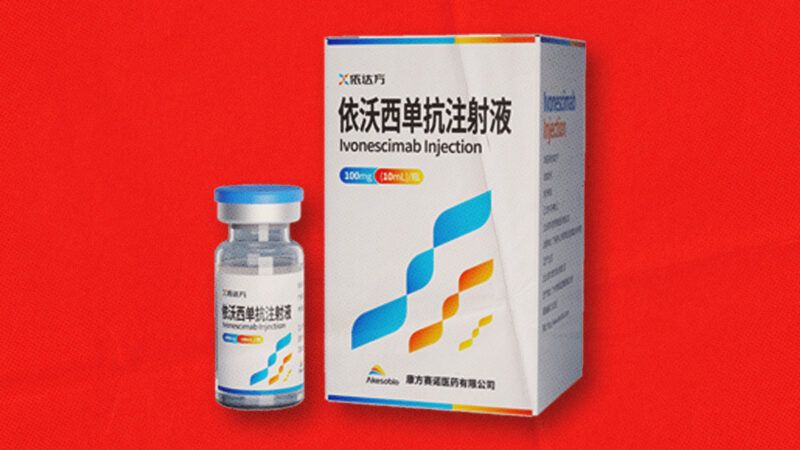
China approved a drug for some patients with advanced lung cancer in May 2024. American doctors still can't routinely offer it. On November 15, Summit Therapeutics announced that the Food and Drug Administration (FDA) had rejected its application to market the drug ivonescimab for patients whose cancer had progressed despite targeted treatment. Adding the drug to chemotherapy kept the cancer in check longer than chemotherapy alone, but the global trial didn't show that patients lived longer. According to Summit, the FDA wasn't convinced the delay justified making the drug available in the United States.
Some lung cancers grow because of a mutation in the gene for a protein called EGFR, short for "epidermal growth factor receptor." The mutation can leave the cell's growth signal stuck in the "on" position. Doctors can block that signal with a drug called Tagrisso. In one randomized trial, patients who started treatment with Tagrisso and chemotherapy lived a median of about 48 months, compared with about 38 months for those who took Tagrisso alone. Even with treatment, the cancer can start growing again.
Ivonescimab can slow the same type of lung cancer without blocking the faulty EGFR signal. It helps immune cells attack the cancer and interferes with the signals tumors use to grow blood vessels. In a global trial, patients who received ivonescimab with chemotherapy lived longer before their cancer worsened or they died than those who received chemotherapy alone. The trial didn't establish that patients lived longer overall. A separate Chinese trial did find a survival benefit.
In 2024, the FDA approved combining Rybrevant (amivantamab-vmjw) with chemotherapy for many of the same patients. That combination also kept the cancer in check longer than chemotherapy alone, but the evidence at the time didn't establish that patients lived longer. Why did a delay in tumor growth count then but fall short now?
Rybrevant's trial found that adding the drug to chemotherapy increased the frequency of rashes, nail problems, and infusion-related reactions. Ivonescimab studies have reported high blood pressure and protein in the urine. No trial has compared the drugs head-to-head, so we don't know which patients would tolerate either drug better overall. Even if ivonescimab never proves better than Rybrevant at extending life, patients and their doctors may weigh those risks differently. A second option could also give hospitals and insurers more room to negotiate on price.
The FDA may have good reasons for reaching different conclusions. The trials differed, and the drugs carry different risks. Many of these patients already have Rybrevant. But a patient who can't tolerate Rybrevant's side effects might be willing to accept the risks of ivonescimab. Another might choose Rybrevant because doctors have more experience with it. The FDA owes patients an explanation for treating the two drugs differently. With their doctors' help, patients should be free to decide which tradeoffs they're willing to make.
Congress passed the Right to Try Act in 2018 to give eligible patients with life-threatening illnesses a way to seek investigational drugs without asking the FDA to approve each request. But the FDA still decides whether the manufacturer can sell the drug. The law generally bars the agency from using a patient's outcome under Right to Try to delay or derail approval, but it allows an exception when the agency finds that the outcome is critical to judging the drug's safety. A manufacturer with years of work riding on an FDA decision may decide that supplying the drug outside a trial is too big a risk. Doctors and hospitals may have concerns of their own, and all should remain free to decline. The law's limited record shows how little waiving permission for individual requests can accomplish while the FDA still controls access to the market.
Congress can help by ending the FDA's authority to keep medicines off the market when informed adults are willing to use them. Ideally, Congress would abolish the agency and leave the evaluation of medicines to independent organizations. Researchers would still run trials. Doctors could explain the evidence to their patients, and manufacturers would still be held accountable for fraud and defective products. Adults could seek professional advice without the government making it a legal prerequisite to buying medicine.
If Congress isn't ready to go that far, it could start with "international drug reciprocity." When a foreign regulator that meets clear scientific review standards approves a drug, Congress could allow U.S. sales for the same use without requiring the manufacturer to undergo a second full approval process. Australia, New Zealand, Switzerland, and Israel already have ways to rely on foreign drug reviews or approvals without repeating the entire review. European Union members can recognize one another's drug approvals through a mutual recognition procedure. Manufacturers should clearly state on the label that the FDA hasn't approved the drug and identify the foreign agency that did. The same principle could apply to medicines that qualified regulators already allow people to buy without a prescription. Whether China's approval of ivonescimab would qualify would depend on the standards Congress sets. But when a foreign review meets those standards, why make American patients wait for Washington to repeat the work?
A patient whose lung cancer is growing again may be willing to try a drug that could keep it in check, even without proof it will extend their life. If they understand the risks and their doctor and the drugmaker are willing to help, Washington should get out of the way. The FDA can wait for more evidence. The patient may not have that luxury.