
Donald Trump Is Losing Young White Men Who Voted for Him
The administration has to think about doing something for this group beyond mere fan service.
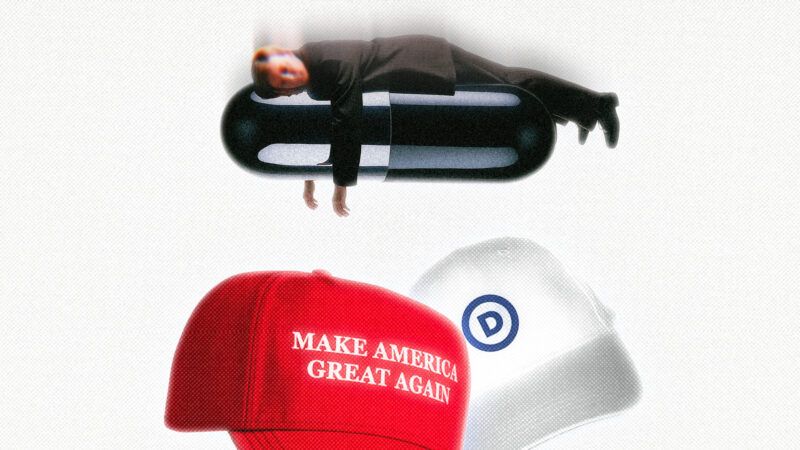
The Republican Party has just suffered one of its worst defeats in my lifetime, on par with the 2006 "thumping" it endured in response to then-President George W. Bush's unpopular Iraq War. Having failed to internalize this lesson, the GOP proceeded to launch another unpopular war in the Middle East—this time not even bothering to consult the American people, international allies, or Congress—and it has come to the same end: an electoral bloodbath.
You are reading Free Media from Robby Soave and Reason. Get more of Robby's on-the-media, disinformation, and free speech coverage.
So what went wrong? The aforementioned war in Iran, first and foremost, is clearly the cause of much discontentment toward the Trump administration. The war has impacted energy prices, and voters are known to punish the president's party for overlooking basic economic reality. Widespread tariffs have also hurt the economy, and along with excessive immigration enforcement and the baseline level of corruption within the administration, it has probably looked to voters like President Donald Trump is indifferent to their hardships.
The GOP's diminished share of the young white male vote is particularly noteworthy. Much ink was spilled in 2024 over the Trump campaign's success at courting the podcast bro demographic, which is disproportionately young and male. (Not all of them are white—Trump actually performed remarkably well with black male voters under 25.) They share certain characteristics: skepticism of establishment media, disenchantment with both political parties, opposition to foreign military intervention, and hostility to wokeness, cancel culture, and scolding in general. Trump did an impressive job of reaching these voters and communicating that he was the guy who took them seriously. He understood their vibe; former Vice President "Momala" Kamala Harris did not.
Well, a lot can change in two years. Young white men shifted massively against Republicans, according to exit polls. This group swung 28 points toward Democrats; men overall swung 36 points. This means, contrary to the assumptions of many right-wing pundits, that the GOP's problem is not merely that non-white voters refuse to vote for them—since they actually lost their key demographic. Conservative commentators often argue against immigration on the grounds that diluting the white share of the vote is intrinsically harmful to their electoral prospects, but these midterms disproved that yet again because it wasn't just the non-white voters who picked the Dems.
Contra the "demographics is destiny" argument, men—even young white men in particular—shifted much harder than Latinos. Trump lost these voters on the economy, the war, and corruption.
The "podcast bros," whatever you think about them, were actually an early warning sign. pic.twitter.com/UIM3GqfhMl
— Christopher Rufo (@christopherrufo) November 4, 2026
"It turned out that reversing 'woke' culture and reclaiming traditional masculinity weren't enough for a demographic that was struggling to stay afloat in a difficult economy and strongly opposed Trump's unpopular war with Iran," writes Rosie Gray in The Washington Post.
She continues:
What Republicans failed to realize is that this is a group that is increasingly checked out from institutional politics, full stop. Trump presented himself as a lifeline for young men while they struggled to navigate a challenging job market amid changing social mores and gender roles. Two years later, jobs in male-dominated industries have continued to dry up, and men continue to lag behind women in educational attainment. Young men have been clear about what they'd like to see from politicians, consistently telling pollsters that their top concerns are economic. They're worried about inflation, housing costs and employment.