
D.C. Regulators Shut Down a Halloween Bar Crawl Under the District's 'Public Nuisance' Order
In the nation's capital, organizing a Halloween pub crawl can land businesses thousands of dollars in fines.
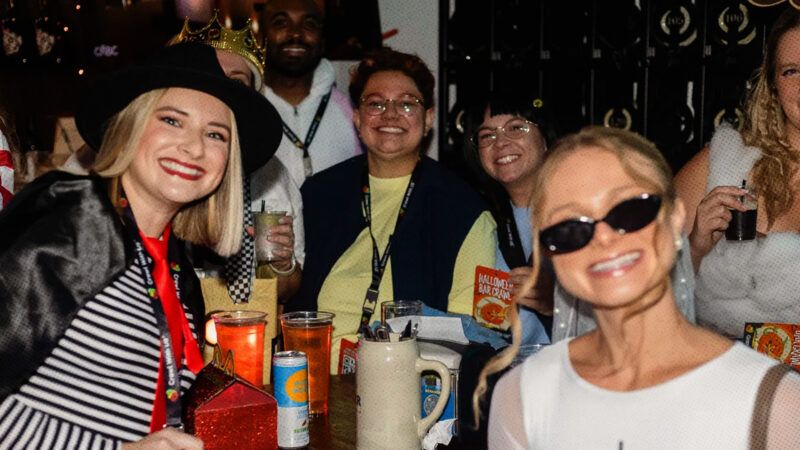
Halloween is a distinctly American holiday. While it has been exported to Europe, as a Brit, I was thrilled to spend my first proper American Halloween dressed as Cleopatra, partying in the country's capital. In European cities, I would often spend evenings hopping between bars on organized bar crawls, but this Halloween I wasn't able to because of Washington, D.C.'s prohibition on pub crawls.
Under D.C. law, the city's Alcoholic Beverage and Cannabis Administration is explicitly prohibited from approving pub crawls on October 31. The ban was introduced in 2016 following complaints of overcrowding, litter, and public drunkenness on Halloween in 2015. It also applies to the Fourth of July and New Year's Eve, meaning that on America's most joyous holidays, organizing a pub crawl could cost you thousands of dollars in fines.
This Halloween, one company was forced to shut down its plans. The event—Mad City Bar Fest—was organized by D.C.-based marketing company Versus, and was scheduled to take place last Saturday, with tickets starting at $19.98 per person. In a September 2 email to the city's Alcoholic Beverage and Cannabis Administration, Versus CEO Vinoda Basnayake insisted that his company was not organizing a pub crawl, but merely marketing separate Halloween parties at different bars: "We are NOT throwing a pub/bar crawl on 10/31!…What we're actually marketing is 10 individual Halloween parties across Navy Yard venues, which Versus/Mad City acting purely as the marketing company behind them."
"The site explicitly states this is not a bar crawl. It contains none of the elements that define a bar crawl – no map, no predetermined route, no coordinated itinerary between venues, and no shared drink specials across venues," Basnayake added.
D.C. regulators were not convinced. An investigation found that the event's advertising featured a map of participating bars, and promised customers wristbands granting access to multiple venues. On October 7, the Alcoholic Beverage and Cannabis Board issued a 10-page cease-and-desist order against the organizer and eight participating establishments, warning of further enforcement action if they proceeded with the event.
"An unapproved pub crawl constitutes a public safety risk and a public nuisance," reads the order. "The Board finds that the undertaking of an unapproved and unsanctioned pub crawl causes immediate and irreparable harm to the public by the Respondents due to risks to public safety and the potential for other public nuisances."
The danger, as they saw it, was the possibility of "large amounts of inebriated patrons traversing through public space"—an elaborate way to describe drunk people walking between bars. The board also warned that, if it allowed the event to proceed, they would be enabling the organizers to "profit from a willful and intentional disregard of the law" and "collectively engage in a public nuisance."
America has a strange relationship with alcohol. Not only is the drinking age higher than in most European countries, but open-container laws mean that, in most of the country, consuming alcohol in public is illegal (unlike in most of Europe). Interestingly, state and local governments have recognized how unnecessary these laws are and loosened them for special occasions. This includes Boston, which relaxed its open-container laws during this summer's World Cup, allowing visitors to drink on designated streets.
Luckily, partygoers in the District who wished to participate in a pub crawl over the weekend were able to take a short Metro ride over to Alexandria, Virginia, where Halloween pub crawls were plentiful. Of course, Virginia managed to survive the weekend's festivities just fine, but D.C.'s already struggling hospitality sector will have missed out on the revenue.
Regulators are all too often glorified fun sponges, but this particular law is especially absurd. If the greatest threat to public safety is drunk people daring to have fun, D.C. regulators have rather peculiar priorities.