
Nashville Considers Using Eminent Domain To Stop a Planned Data Center From Irritating Zoo Animals
The Nashville Zoo says the vibrations from next door's planned data center might negatively affect hearing-sensitive animals.
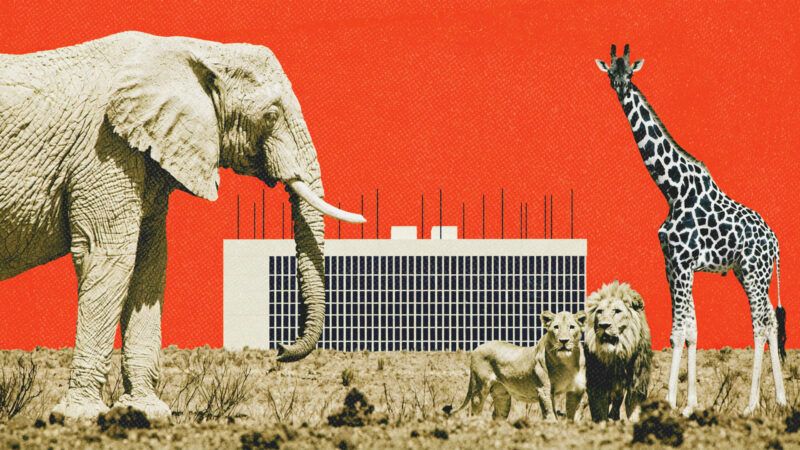
Data centers, already unloved by the general public, have a new enemy: cuddly leopard cubs.
In Nashville, plans by Atlanta-based company DC BLOX to build a data center have provoked heated opposition from the Nashville Zoo, next to which the planned facility would go.
The zoo argues that the constant hums and vibrations from the data center would have a negative impact on animals with sensitive hearing; chief among them the clouded leopards bred in the zoo.
"Clouded Leopards are notoriously sensitive to any mechanical noise, which causes excessive stress and elimination of successful breeding, harming the overall endangered population," wrote the zoo's president, Rick Schwartz, in a June op-ed for the Tennessean.
It's an argument that's resonated with local officials.
It was reported on Monday that DC BLOX closed on its purchase of the zoo-adjacent site for $23 million.
On Tuesday, the Nashville-Davidson Metro Council passed a temporary moratorium on new data centers and new zoning restrictions on these facilities. Councilmembers also advanced legislation pushed by Nashville Mayor Freddie O'Connell that would enable the city to seize DC BLOX's property via eminent domain.
Data centers are not particularly noisy land uses. On a decibel scale, they're a bit louder than libraries and a bit quieter than pickleball courts.
Neighbors nevertheless complain that the low, constant drone of data centers' cooling equipment is still a nuisance, and one that's often inadequately regulated by local noise limits set in decibels.
Whether the character of data centers' noise emissions poses a particular risk to animals is a new question without a clear answer, says Jennifer D'Agostino, the chief animal program officer at the Oklahoma City Zoo and president of the American College of Zoological Medicine.
"This is a bit of new territory," she tells Reason. "We don't have anything directly to compare [data center noise] to."
D'Agostino says the primary noise concerns zoos are most used to dealing with are those generated by one-off events that might draw larger crowds at unusual times to the zoo itself.
Nearby highways or airports are probably the closest comparable noise impacts to a data center's steady hum, she says. Zoos typically mitigate those through installing soundproofing barriers and materials around the perimeter and on individual habitats.
Longer-term observation would be required to provide better information on how data centers' particular noise impacts affect animals, she says.
Data centers' unknown noise impact on zoo animals presents an awkward problem for the DC BLOX project. The zoo can't show any specific evidence that data centers would pose a unique problem for its animals. The company can't cite evidence showing that data centers' noise impacts are completely fine for zoo animals either.
For its part, DC BLOX has committed to installing sound barriers on its side of the line, using quieter equipment in its actual facility, and keeping its noise levels below the limits required by the zoning code.
The industrial park in which its data center would go already hosts a smaller data center, it notes.
"We will not add perceivable incremental sound at the property line, and sound levels reaching the zoo will be even lower," reads a company brief on its Nashville proposal.
In early July, the company said it had a "productive" meeting with the zoo's leadership and the mayor about its project.
But that didn't stop Tuesday's zoning restrictions and eminent domain legislation from advancing. Nor did it seem to turn attitudes at the zoo.
"We remain committed to ensuring the proposed data center is not built adjacent to Nashville Zoo and we hope DC Blox recognizes the overwhelming message from our community and abandons its plans for this location," wrote the zoo in a Facebook post.
In addition to the legitimate noise concerns it's raised, the zoo has also raised the laundry list of complaints one typically hears about data centers, including that it would strain local water and power resources, allegedly causing a detrimental impact on "the people of Tennessee's most ethnically diverse communities."
For all the public backlash, DC BLOX's project would seem to have the upper hand legally.
Per Axios, city zoning officials have said that the new zoning restrictions on data centers can't apply to the DC BLOX project, given that it had already filed the necessary permit applications by the time the new regulations had passed.
And the old rules allow for DC BLOX's project.
The company could also potentially challenge the effort to take its land via eminent domain on the grounds that it's a pretextual taking.
The legislation authorizing Metro to take the DC BLOX site cites the government's need for office space as the "public use" that would authorize the seizure. Given the context, it's clear that Nashville's seizure is primarily motivated by a desire to stop the data center project.
Provided that Metro's plans for the office space are vague enough, DC BLOX could argue that the public use cited by the city to take its land is pretextual and therefore the seizure is unconstitutional.
Time will tell if it comes to that. Nashville Banner reports that the eminent domain legislation could come up for a final vote on August 4.