
Supreme Court Quashes Scientifically Bogus Lawsuits Against Roundup Herbicide
Thousands of lawsuits alleging Roundup causes cancer are likely dead after Supreme Court Monsanto ruling.
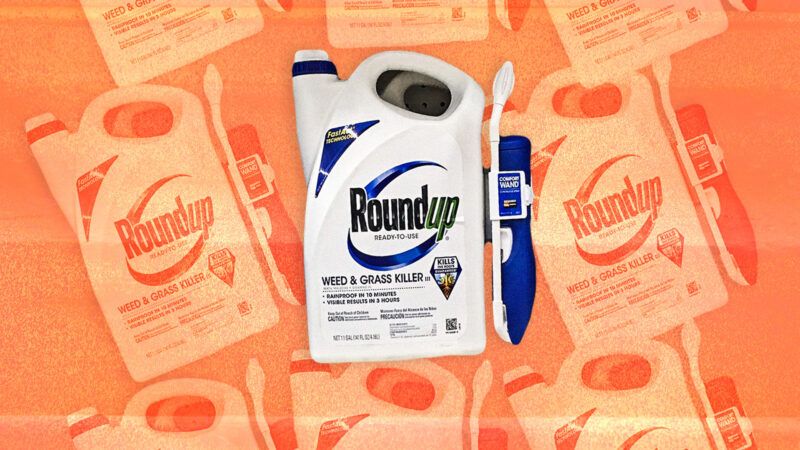
The U.S. Supreme Court ruled Thursday in favor of the manufacturer of the popular weed killer Roundup, blocking tens of thousands of lawsuits alleging that the herbicide caused their plaintiffs' cancers.
The case before the Supreme Court stems from John Durnell's 2019 lawsuit against Monsanto in which he claimed that he had developed non-Hodgkin's lymphoma, a type of blood cancer, because of his use of Roundup for two decades. In his lawsuit, he argued that Monsanto should have included a cancer warning label on Roundup. In 2025, the Missouri Court of Appeals affirmed a state jury's award of $1.25 million to Durnell based on the plaintiff's failure-to-warn theory.
The thousands of similar lawsuits now claiming that glyphosate causes cancer trace back to the scientifically contested and controversial 2015 monograph by the International Agency for Research on Cancer (IARC) that classified the herbicide as "probably carcinogenic to humans."
In the years since the IARC monograph, numerous safety and regulatory agencies have repeatedly found that the weed killer is safe when used as directed. These include including the U.S. Environmental Protection Agency, the European Food Safety Authority, Canada's Pesticides Regulatory Directorate, and Australia's Pesticides and Veterinary Medicines Authority.
In its 7–2 decision announced in Monsanto Co. v. Durnell, the Supreme Court ruled that the EPA's safety determination and warning label requirements preempt the Missouri state court's finding that the company should have added a cancer warning label.
"In accordance with EPA's view that glyphosate is not likely to cause cancer in humans, EPA has not required glyphosate-based pesticides like Roundup to include a cancer warning on their labels," wrote Justice Brett Kavanaugh in the majority opinion. "Therefore, as a matter of federal law, Monsanto legally must use a label without a cancer warning unless and until EPA approves or requires a change."
Disagree with federal preemption if you will, but the Court correctly decided that the vagaries of toxic tort litigation are not the right way to balance benefits and risks in this case.