
Justice Department Indicts Cuba's Raúl Castro for 1996 Shootdown That Killed 4 Americans
Nearly 30 years after Cuban fighter jets destroyed two civilian aircraft over international waters, the former Cuban dictator faces federal murder charges.
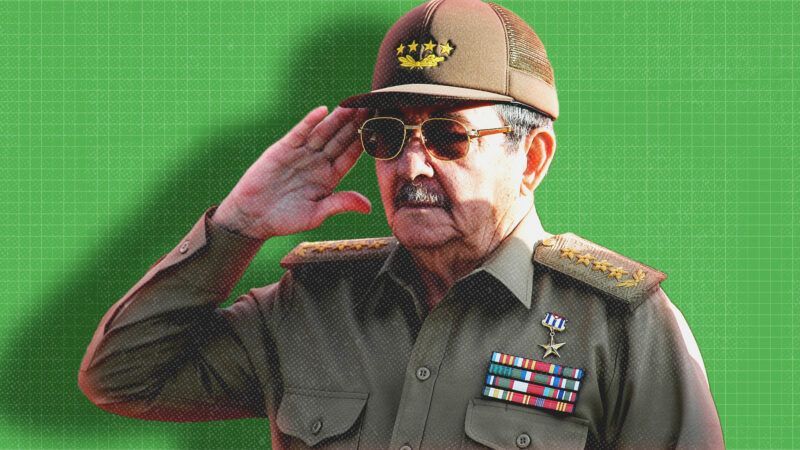
Raúl Castro, Cuba's 94-year-old former dictator, was indicted Wednesday for his alleged role in the 1996 shootdown of two civilian aircraft operated by Brothers to the Rescue, a Miami-based humanitarian group founded by Cuban exiles.
The indictment, returned by a federal grand jury in South Florida on April 23 and unsealed Wednesday in Miami, charges Castro and five Cuban military officials in connection with the February 24, 1996, attack that killed three American citizens and one legal permanent resident. The Justice Department announced the charges at Miami's Freedom Tower, a symbol of the Cuban exile community and the site where hundreds of thousands of Cuban refugees were processed after fleeing Fidel Castro's revolution.
Brothers to the Rescue was founded by Cuban Americans to help locate and aid Cubans fleeing the island by sea. But by the early 1990s, Cuban intelligence had infiltrated the group, placing spies inside its Miami operation and posing as exile pilots.
In January 1996, after a Brothers to the Rescue aircraft dropped pro-democracy leaflets over Cuban territory, Raúl Castro, then Cuba's defense minister, allegedly authorized the use of deadly force against the group's planes. Cuban authorities then launched what became known as Operation Scorpion, instructing spies inside Brothers to the Rescue to provide information about upcoming flights while avoiding the deadly February mission themselves.
One of those agents, Juan Pablo Roque, had cultivated a relationship with the FBI while secretly working for Cuban intelligence. On February 21, 1996, three days before the attack, Roque told the FBI that Brothers to the Rescue would not be flying that weekend. Two days later, he fled to Cuba.
On February 24, two Brothers to the Rescue Cessnas were flying over international waters when Cuban fighter jets fired air-to-air missiles and destroyed them. A third plane escaped. Cuba has long claimed the aircraft were inside Cuban airspace, but international investigators concluded the planes were shot down over international waters. The pilots received no warning before they were killed. According to the indictment, the strike was the product of a planned Cuban military operation.
Castro and the five other defendants are being charged with conspiracy to kill U.S. nationals. Castro also faces two counts of destruction of aircraft and four counts of murder. At Wednesday's press conference, Sen. Ashley Moody (R–Fla.) said the charges could carry a sentence of up to life in prison or the death penalty.
The evidence against Castro may include a recording in which he discussed the shootdown, a recording that has reportedly circulated for years within U.S. intelligence circles, according to policy analyst Imdat Oner.
The indictment comes as the Trump administration escalates pressure on Havana. Earlier Wednesday, Secretary of State Marco Rubio marked Cuban Independence Day with a message in Spanish to the Cuban people, attacking the regime's economic record. Rubio argued that Cuba is not controlled by revolutionaries but by GAESA, the military-run conglomerate built under Raúl Castro, which Rubio says dominates much of the Cuban economy.
The move also follows a recent Axios report that Cuba has acquired more than 300 military drones and that Cuban officials have discussed potential attacks on the U.S. base at Guantánamo Bay, U.S. military vessels, and possibly Key West, Florida, according to classified intelligence cited in the report.
The Castro indictment is difficult to separate from the administration's recent Venezuela playbook. Venezuelan leader Nicolás Maduro, indicted in 2020 on narcoterrorism charges, was captured by U.S. forces in the capital city of Caracas in January and brought to the United States to face trial. The question now is whether Washington is preparing a similar strategy for Castro, or whether the indictment is meant primarily as leverage against Havana's current leadership.
"This is not a show indictment," Acting Attorney General Todd Blanche said Wednesday. "We expect that he will show up here by his own will or by another way."