
Despite Trump's Promises and Rodríguez's Amnesty Law, Hundreds of Venezuelan Dissidents Are Still Behind Bars
Courts are blocking amnesty applications for Venezuelan dissidents with no explanation and no appeal deadline.
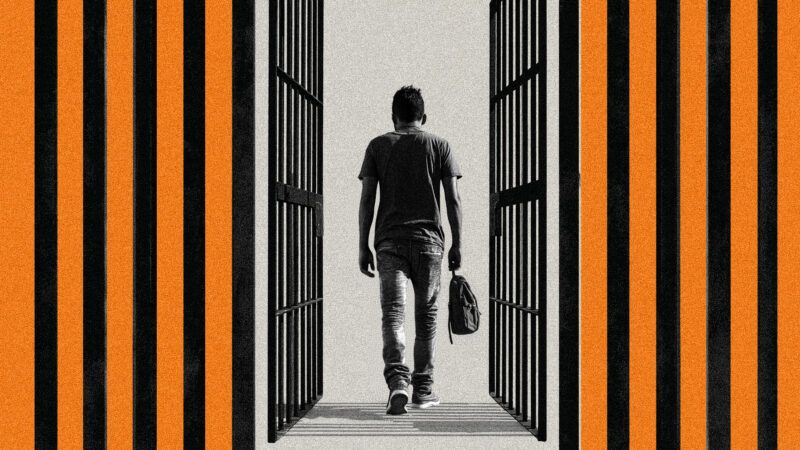
Hours after American forces seized Venezuelan dictator Nicolás Maduro and flew him to New York to face narco-terrorism charges, President Donald Trump stepped before the cameras with a message for the Venezuelan people: "You're gonna have peace, and you're gonna have safety. You're gonna have justice."
The mechanism for delivering that justice arrived in February, when Maduro's successor, Delcy Rodríguez, signed an amnesty law designed to free almost 1,000 political prisoners who were incarcerated at the time. Secretary of State Marco Rubio said the passing of this law was "very positive," but warned it was not enough. A few months later, nothing has really changed for Venezuelans.
The same judicial apparatus that imprisoned more than 2,000 people for protesting Maduro's fraudulent 2024 reelection is now deciding who gets to be freed. To obtain amnesty, detainees must petition the same courts that prosecuted them and hope to get a response within 15 days. The regime says more than 4,000 amnesty applications have been filed since February, and hundreds of prisoners have walked free.
At least 485 people remain in political detention as of early April, some of whom aren't Venezuelan citizens, according to Foro Penal, a human rights watchdog. In recent weeks, authorities have denied 111 amnesties, Martha Tineo, director of the Venezuela-based human rights organization Justicia, Encuentro y Perdón, tells Reason. The real number is likely higher, she says, because accurately tracking denials is "practically impossible," as many affected individuals choose not to make the information public for fear of retaliation.
Many dissidents affected by the arbitrary application of the amnesty law have found themselves excluded from its protections. The text bars actions linked to "terrorism," a vague term that has been used with significant discretion by prosecutors to criminalize political opposition.
This has been the case with Daniel Echenagucia, a 48-year-old cattle industry administrator, who was arrested in 2024 while traveling in the country with his wife, Marien Padilla, and their two teenage children. Padilla says officers never showed the family the arrest warrant they claimed to have. She and the children were also detained, their phones confiscated, and later taken back to the family home, where officials searched the house and seized passports, phones, and electronics. Padilla and the children have not seen Echenagucia since.
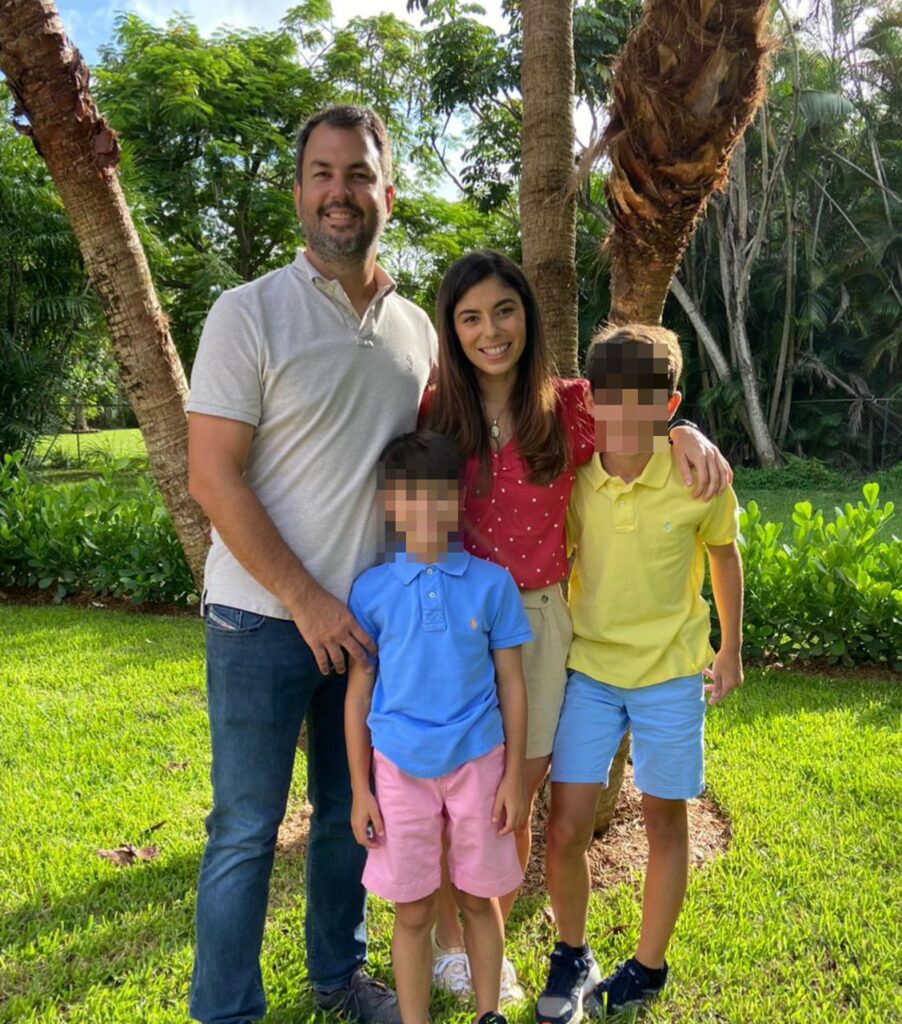
Echenagucia, an Italian-Venezuelan dual national, has been charged with terrorism, conspiracy, financing of terrorism, and criminal association. Padilla says her husband has lost roughly 60 pounds in prison, and though a release order was issued in January, he remains behind bars. Authorities recently denied his amnesty request, arguing that he was implicated in events from 2019. Padilla disputes that, claiming the family lived in the United States from 2018 to 2022 and was not in Venezuela at the time. Echenagucia's mother is a U.S. citizen and has appealed directly to Trump and Rubio to secure her son's release.*
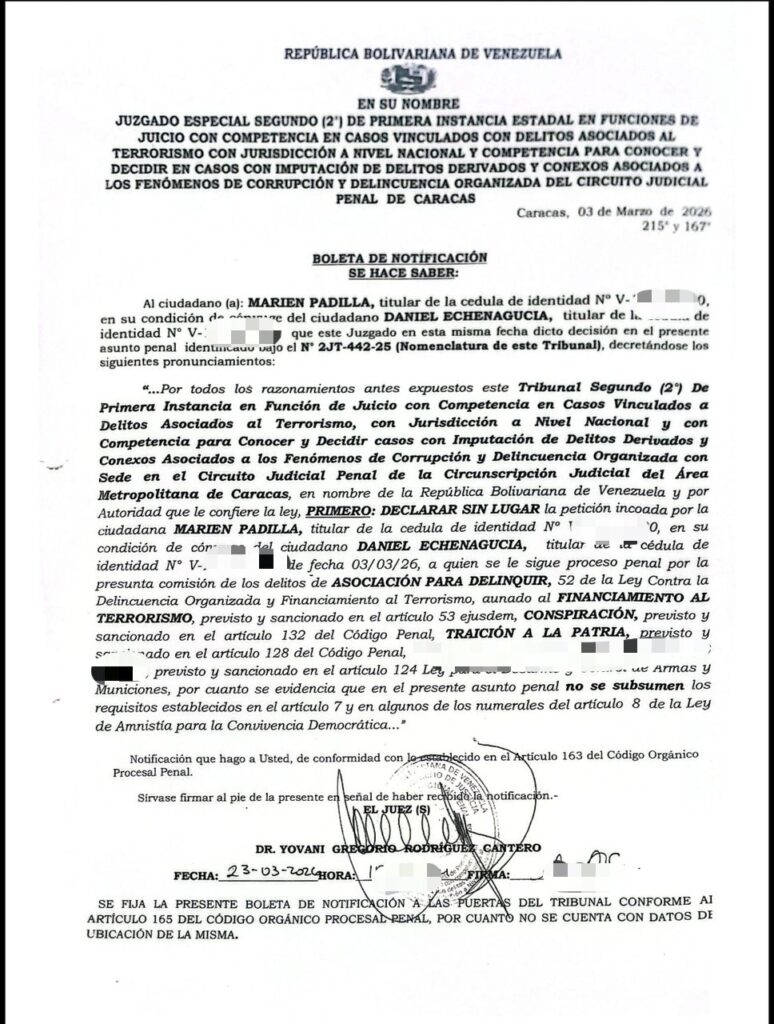
The Rodríguez regime argues the exclusions are legitimate. However, the pattern of denials evidences arbitrary application. Nakary Mena Ramos, a journalist detained over her reporting on rising criminality, was denied amnesty on March 13, only for the charges to be dismissed and her freedom granted days later.
In March, a court told Gabriel González, a journalist working on María Corina Machado's presidential campaign, that he was granted amnesty, barring him from appointing a private attorney or accessing his case file. Weeks later, the same court formally denied his amnesty request.
‼️ Hoy 13 de abril me fue notificada la negativa da la solicitud de Amnistía.
A inicios de marzo en el Tribunal 3ro de Juicio de Terrorismo se me informó, luego de que revisaran en una computadora, que aparecía que había sido "beneficiado" por la Amnistía, por lo que no me… pic.twitter.com/O81dcFDJYP
— Gabriel González (@IsmaelGabriel22) April 14, 2026
Javier Tarazona, a university professor, spent more than four years imprisoned, tied to his reporting on violence along the Venezuelan border. Although he was released in February, he was denied amnesty, and the case against him remains active.
Trump has repeatedly invoked Venezuela as proof that his interventionist model works, drawing a direct link to his ongoing military campaign against Iran. But for the Venezuelans whose amnesty requests sit unanswered in courts that answer to the same regime that jailed them, the transformation Trump promised hasn't materialized. The dictator's name has changed, but the oppressive apparatus has not.
*CORRECTION: This piece originally misstated the nationality of Daniel Echenagucia's parents.