
Blind Refugee Found Dead 5 Days After Release From Border Patrol Custody in Buffalo
The Department of Homeland Security claims that the refugee was dropped off at a “warm, safe location” in Buffalo, New York. But he never made it inside.
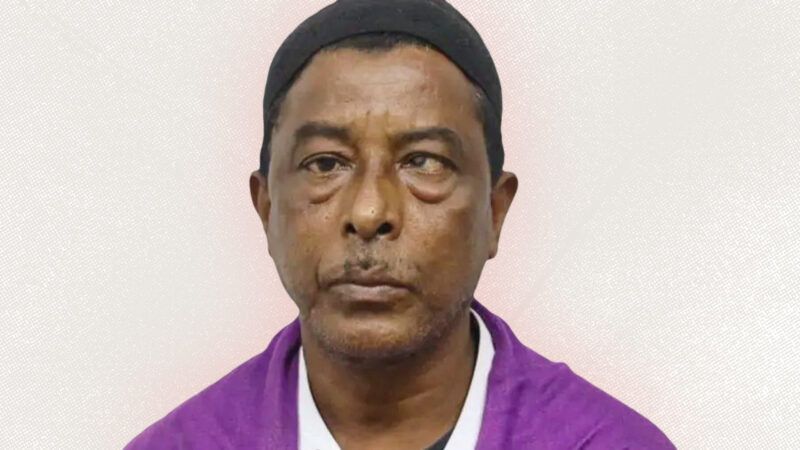
After searching for five days, a partially blind refugee was found dead on Tuesday, only five miles from where U.S. Customs and Border Protection (CBP) agents dropped him off after releasing him from custody. The discovery raises questions surrounding the conditions in which immigrant detainees are released from federal custody over a year into President Donald Trump's immigration crackdown.
Nurul Amin Shah Alam came to the U.S. as a refugee in December 2024, as a member of Myanmar's persecuted Rohingya minority, but was arrested last February in Buffalo, New York, according to The Washington Post. Body cam footage reveals law enforcement officers confronting and using Tasers on Shah Alam, who was trespassing and using a curtain rod as a walking stick. He was then arrested for allegedly trespassing and biting law enforcement officers; he pleaded guilty to two misdemeanors "in the interest of justice," according to a district attorney who noted that a felony conviction would've led to Shah Alam's mandatory deportation, reports The Post. With his sentencing set for next month, Shah Alam posted bond on February 19, and the Erie County Sheriff's Office transferred him to Border Patrol custody.
According to a Department of Homeland Security (DHS) post on X, after Border Patrol agents confirmed that Shah Alam was a refugee and not deportable, the officers offered a "courtesy ride" to "a coffee shop, determined to be a warm, safe location near his last known address, rather than be released directly from the Border Patrol station."
But Shah Alam never made it inside the "warm, safe" coffee shop. Security footage obtained by Investigative Post, a Buffalo nonprofit, shows a white van dropping off a man matching Shah Alam's description in front of a Tim Horton's coffee shop on the evening of February 19. The man in the video exits the van over an hour after the store closed to walk-in customers, walks past the still-open drive-through window, and never enters the coffee shop, according to The Post.
The DHS also claimed on X that Shah Alam "showed no signs of distress, mobility issues, or disabilities requiring special assistance." However, according to a missing persons poster circulated by family and friends after Shah Alum went missing, he had back problems and difficulty walking. The poster also said that the 56-year-old didn't know how to use a phone and didn't know phone numbers or addresses.
The Erie County Medical Examiner has yet to establish a manner or cause of death, reports The Post. However, since his discovery, Democratic officials have already called for an investigation into and accountability for Shah Alam's death. Buffalo's Mayor Sean Ryan accused the CBP of a "dereliction of duty," and New York's Democratic Gov. Kathy Hochul called for "accountability" after agents left him to find his way home alone. And Democratic Sen. Chuck Schumer of New York demanded an independent investigation into both Immigration and Customs Enforcement (ICE) and CBP for answers.
Concerns have been mounting over the treatment of immigrant detainees ever since Trump kicked off his immigration crackdown last January. Faced with a record number of arrests and detentions, many of whom have no criminal record, the DHS and its subordinate agencies have been accused of a wide range of unconstitutional conduct. Alarmingly, over the last few winter months, immigration agencies have been accused of releasing detainees—some of whom were wrongfully arrested—without a winter coat or a way home, and without returning immigration documents to prove their legal status.
This pattern, along with the tragic death of Shah Alam, raises serious questions surrounding the DHS' policies when conducting arrests, detentions, and now releases. Transparency and accountability in federal custody, including immigration detention—however brief—is critical to ensuring not only the safety and constitutional rights of individuals, but to maintaining the public's trust and support for the rule of law.