
Don't Believe Trump's Brags About Bringing Down Drug Prices
The president can't just bring prices down with the stroke of his pen, no matter what he claimed in his State of the Union speech.
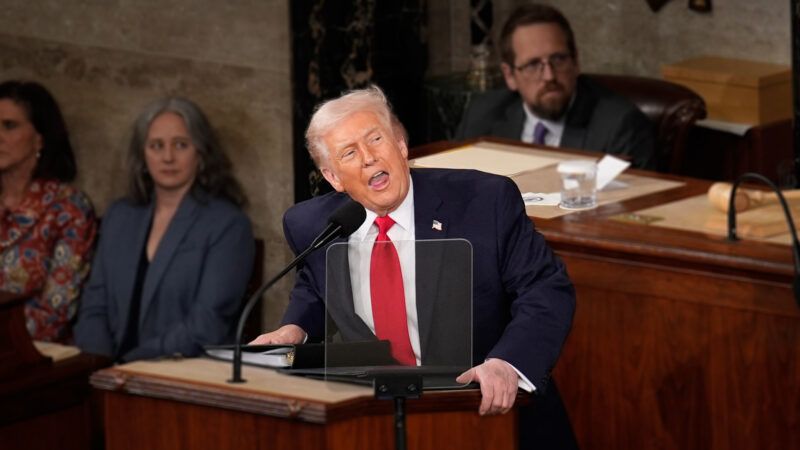
At the 2026 State of the Union address, President Donald Trump bragged that he is "ending the wildly inflated cost of prescription drugs."
"I got it done under my just-enacted most-favored-nation agreements," he claimed. "Americans, who for decades paid by far the highest prices of any nation anywhere in the world for prescription drugs, will now pay the lowest price anywhere in the world for drugs anywhere."
But prescription prices don't go up or down with the flick of the president's pen.
Trump signed an executive order in May 2025 directing the Department of Health and Human Services (HHS) to "communicate most-favored-nation price targets to pharmaceutical manufacturers to bring prices for American patients in line with comparably developed nations." By "most favored nation," he means a country gets the same deal as whatever country is currently getting the best deal.
"Prescription Drug and Pharmaceutical prices will be REDUCED, almost immediately, by 30% to 80%," Trump posted on Truth Social at the time. The White House declared that 16 pharmaceutical manufacturers had agreed to lower their prices.
Trump routinely touted the success of his order, throwing out completely fictitious numbers. He bragged in November, "we're bringing drug prices down to levels nobody ever thought was possible, tremendous cuts, 200 percent, 300 percent, 500 percent, 700 percent and even more than that."
Of course, bringing a price down by 100 percent would make it free, and anything larger would mean the company paid you to take its drug.
His math wasn't the only thing he'd gotten wrong.
"Since September, 16 major drug companies have inked deals with the Trump administration to lower prices," NPR reported last month. "But in January—the time of year when pharmaceutical companies typically roll out price hikes—all 16 companies released higher list prices for some of their drugs."
The government does have some control over prices. For example, as the largest purchaser of prescription drugs, it can negotiate prices on behalf of federal programs like Medicare. Indeed, starting in January, negotiated Medicare prices took effect for 10 drugs as a result of the Inflation Reduction Act, passed under Trump's predecessor.
But the federal government can't force private companies to raise or lower prices on the things they sell to Americans.
"Trump's executive order is a laundry list of coercive actions he plans to take against drug companies that do not make 'significant progress' toward his 'price targets,'" Michael F. Cannon of the Cato Institute wrote last year. "HHS does not have the power to 'impose' price controls on private pharmaceutical purchases. If it did, some past administration already would have exercised that authority."