
South Carolina Gave $1.3 Billion to Scout Motors. It's Already $150 Million Over Budget.
The company is backed by Volkswagen but still received considerable funding from state taxpayers.
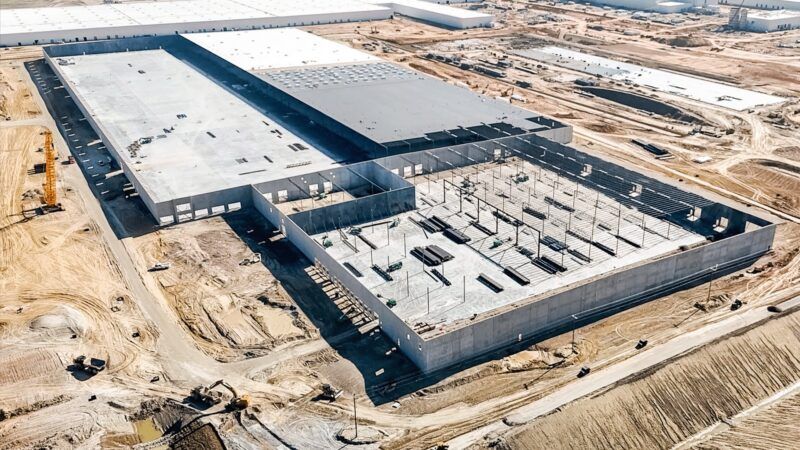
In March 2023, Scout Motors announced it would spend $2 billion to build an electric vehicle (E.V.) factory in South Carolina. The company, a newly launched subsidiary of Volkswagen, would build electric trucks and SUVs.
CEO Scott Keogh said the company chose South Carolina because "the state was ready to go." But it likely didn't hurt that state lawmakers agreed to provide Scout $1.29 billion in incentives, including $400 million for site preparation.
Three years later, Scout has yet to build a single vehicle; it hopes to begin production by 2027. But South Carolina is already $150 million over budget on the project, and officials want state taxpayers to pick up the slack.
"South Carolina has racked up $150 million in cost overruns as it works to fulfill pledges it made to lure electric vehicle maker Scout Motors to the state," Jessica Holdman of the South Carolina Daily Gazette wrote this week.
Holdman noted that in the original incentive plan, the state and county governments "agreed to contract and pay for all of the mass grading work at no cost to the company" as well as "the costs of all associated environmental requirements."
The latter provision accounts for about half of the shortfall: In order to receive construction permits, the company had to "mitigate" the land used to build the factory by preserving or restoring certain wetlands.
This week, the South Carolina Department of Commerce announced that $72 million of the $150 million overage stemmed from wetland mitigation costs. "Commerce initially budgeted $50 million for mitigation efforts, and has already spent $55.5 million on those activities," according to The Herald.
That's in addition to the state's actual construction costs, which apparently have also grown. In his fiscal year 2027 budget proposal, Gov. Henry McMaster requested an additional $50 million for "inflationary construction cost" at the Scout Motors site.
"I know that the inflation has gone up so much on all things that Department of Commerce has spent the money that they have, and they need more," McMaster said earlier this month. "Costs went up. Contracting costs went up. We paid them. We agreed, we will get the site prepared."
Just like the money for wetland mitigation, the extra funding will have to come from state taxpayers. "We would not have the money to pay [contractors] for several years under our regular funding," South Carolina Secretary of Commerce Harry Lightsey told reporters this week.
Cost overruns are perfectly routine on large projects. But those costs are for the companies to bear. If circumstances change, that's part of the gamble. Scout Motors, on the other hand, is benefiting from the largess of South Carolina taxpayers, whom state officials decided should assume a portion of the risk.
And it's not like Scout doesn't have the resources available: At the end of 2024, parent company Volkswagen reported over €40 billion ($47.6 billion) in cash on hand.
Scout estimates that at full capacity, its new factory "will be capable of building up to 200,000 vehicles annually, or roughly 40 vehicles every hour." But it's worth wondering how long it will take to ramp up to that level of demand, if ever.
The 2022 Inflation Reduction Act codified $7,500 tax credits for the purchase of electric vehicles, but President Donald Trump's One Big Beautiful Bill Act terminated the program in October 2025. Sales of E.V.s surged in August and September, only to plummet once the credit expired.
"With government-backed sales incentives revoked at the start of October, total EV sales in Q4 plunged to 234,000 units, down 46% compared to Q3 and 36% lower year over year," Cox Automotive reports.
When it first announced its South Carolina factory, Scout had more reason to be optimistic; given the dip in E.V. sales, it may have to scale back its ambitions. But if that happens, it's not just Scout and Volkswagen who will be on the hook, but South Carolina taxpayers.