
Nobel Prize-Winning European Union Acting Like USSR, Russian Prime Minister Says
Confiscatory desires don't "give a thought to the savings of the population" Dmitri Medvedev says
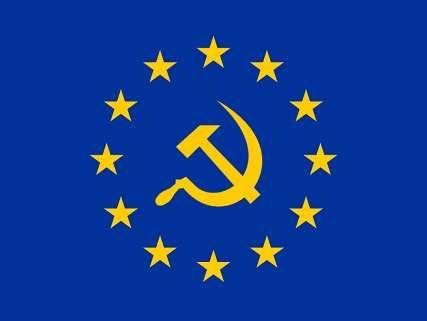
Cyprus' parliament on Tuesday rejected an effort by the European Union to impose a bank levy on Cypriot account holders to help finance a bailout of the country's banks. In response, the European Central Bank told Cyprus it has until Monday to raise the money ($7.5 billion) or the $13 billion bailout is off the table. Last night, senior Eurozone finance ministers reportedly began to talk openly about Cyprus leaving the euro. A few short years ago talk of countries exiting the Eurozone was considered extreme. The EU Observer notes a 2009 legal study by the European Central Bank found that while a country could not voluntarily withdraw from the euro, it could be expelled. Finland began openly discussing contingencies for a break-up of the euro last year, with the country's foreign minister suggesting that it might even "make the EU function better." Switzerland's more extreme (!) contingency of dealing with regional violence and refugees as a result of the euro crisis became public last year too.
A sizable portion of Cypriot accounts are held by Russians, making Russia especially interested in what's happening in Cyprus. Russian Prime Minister Dmitri Medvedev compared the EU's actions to that of a "bull in a china shop" after Cyprus rejected the bank levy. "I can only compare it some of the decisions taken … by Soviet authorities, who did not give a thought to the savings of the population," Medvedev said. The EU won the Nobel Prize last year, joining winners like Barack Obama and Al Gore. Cyprus and Russia are in talks today for a possible separate financial rescue and Cpyriot banks remain closed until at least Tuesday.