
Artifact
Potter Mouth
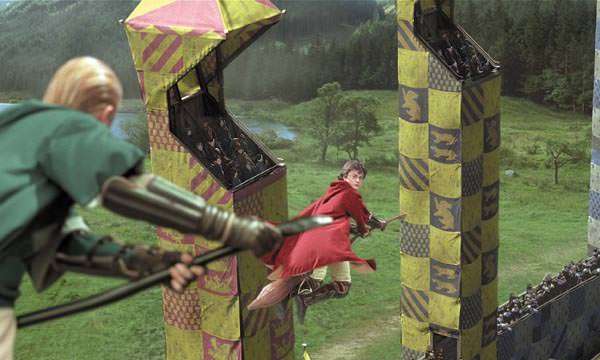
Do sequences like this one from Harry Potter and the Chamber of Secrets turn their young viewers into dolts? Some French filmmakers and critics think so. "I go very often to schools," director Bertrand Tavernier recently told the BBC, "and I have found a lot of young kids have difficulties in analyzing a concept, an idea, in a film." Why? It's the effects. "If the technology is controlling us, it will transform us into stupid children, and in a way, part of the American cinema does that."
If that were possible, French movies would long ago have stupefied the world. Frenchman George Melies invented special effects in the 19th century, while his countrymen the Lumiere brothers astonished early audiences with commonplace documentary footage. The fact is that new technologies are often used for play and pleasure; as they mature, they become part of the fine-arts hierarchy. Sound, photographic, and film technologies, among others, have all followed this path; now comes digital's turn.
"It is a non-culture," Gallic critic Phillipe Rogier said of America on the BBC, "a non-civilization, just a way of life." Yeah, yeah. America's "way of life" values the inventiveness and dynamism of "ordinary" culture; France's celebrates hierarchical cultural authority through a notorious rote-based education. If director Tavernier is encountering thick French students, it just might be France's fault.