
The American Fingerprints on the Genocide in Sudan
Reuters and the U.N. accuse an operator with extensive U.S. government links of helping a Sudanese rebel group.
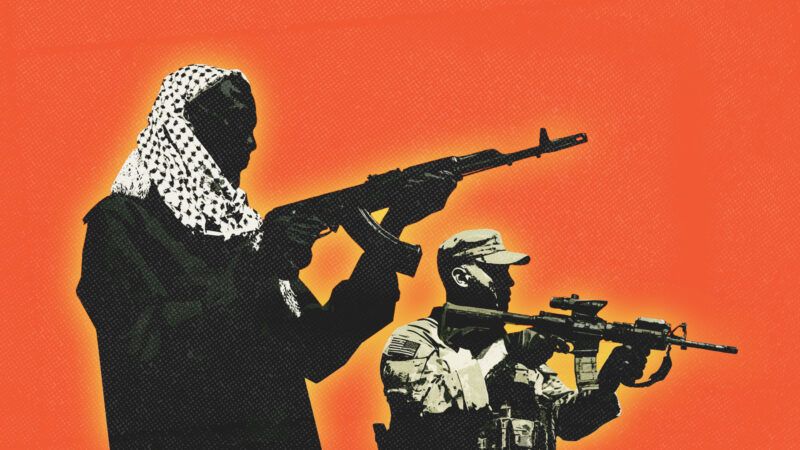
The civil war in Sudan is one of the most brutal conflicts in the world today. In October 2025, a group of mutineers known as the Rapid Support Forces (RSF) overran el-Fasher, the capital of North Darfur province. RSF fighters were videoed (or videoed themselves) shooting captives and brutalizing civilians. The corpses and blood in the streets were visible from space, and estimates of the dead range from 10,000 to 150,000. The U.S. State Department and U.N. Independent International Fact-Finding Mission for the Sudan have both accused the RSF of genocide.
A contractor tied to U.S. special operations may have helped the RSF during the siege, Reuters and a United Nations body recently reported. Reuters reported last month that companies owned by U.S. Army Special Forces veteran Steven Shaulis were flying jets between several RSF logistics hubs throughout 2025, including one airport that was "critical" to the siege of el-Fasher. Last week, the U.N. Panel of Experts on the Sudan wrote that it had "reliable information from four sources that the aircraft had transported RSF fighters and mercenaries, as well as military equipment, including drones and weapons."
The Reuters report was clear that it was not accusing Shaulis of any wrongdoing. He did not respond to requests for comment from Reuters or a follow-up from Reason. His business partner Craig Munro told Reuters last month that reports about the flights—some of which were caught on camera or satellite imagery—were false, that they had no ties to the RSF, and that their air fleet was "carrying medical equipment for a client, in the ordinary course of our business."
The flights came to light because of an air raid on May 2, 2025. The Sudanese military blew up a Boeing 737 just after its flight from the military section of N'Djamena International Airport in Chad to an airfield in Nyala, a town in Darfur controlled by the RSF. The plane was operated by a crew from Occidental Support Services, a company in the United Arab Emirates fully owned by Shaulis. Reuters followed up and found other flights through RSF hubs by planes from Contractor Airways, a South African company co-owned by Shaulis and Munro.
Shaulis has extensive ties in Washington, receiving at least $419 million in U.S. military and U.S. Agency for International Development (USAID) contracts over the past few decades. Jack Murphy, a journalist who covers special operations, wrote in response to the Reuters report that one of Shaulis' companies, CADG, "has been a commercial cover platform for [U.S. Joint Special Operations Command] for decades, almost exclusively by Delta [Force] these days." U.S. Special Operations Command and CADG did not respond to a request for comment.
The U.S. State Department and U.S. Treasury have imposed economic sanctions on both sides of Sudan's conflict for war crimes. But U.S. partners and allies have jumped into the fray. Egypt, Saudi Arabia, Turkey, and Ukraine support the Sudanese central government. The UAE supports the RSF, reportedly sending in supplies and laundering gold stolen by the RSF. Crossing the Red Line, a forthcoming book about the Biden administration's foreign policy by journalist Akbar Shahid Ahmed, quotes a U.S. official suggesting that the administration decided to overlook the UAE's role in Sudan as a reward for helping counter Iran in April 2024.
The civil war started in 2023 due to a split within Sudan's military junta, which had taken power in a 2021 coup d'etat against a pro-democracy revolution. RSF Gen. Muhammad Hamdan Dagalo Musa mutinied against the Sudanese regular army, splitting the country in half. (He had previously been involved in the 2004 massacres in Darfur on behalf of the Sudanese government he is now fighting.) Hundreds of thousands of people have been killed, and millions have been forced to flee.
Publicly, the U.S. government has rightfully stayed out of the conflict, which has only villains and worse villains. But the latest reporting raises questions about whether some people in Washington or their helpers may be discreetly throwing their weight behind one side.