
Can We Ever Trust the Government To Be Honest About War?
Trump joins a long line of presidents unwilling to be transparent about the causes and goals of their adventurism abroad.
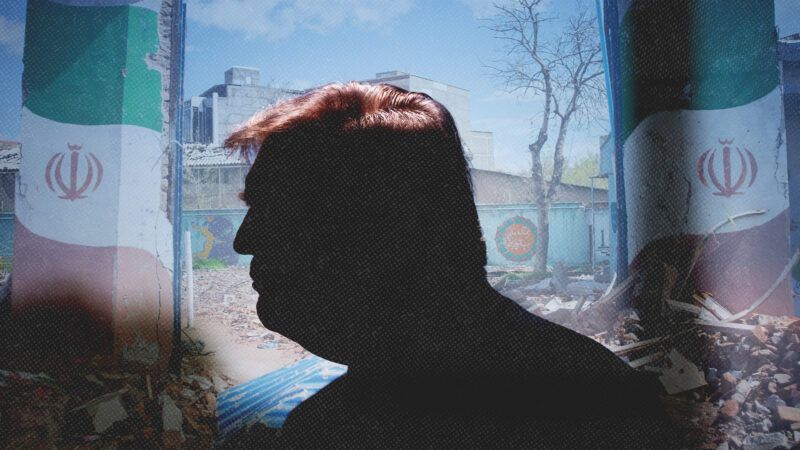
For decades, the U.S. government has been willing to start wars but not strategically and transparently manage them, consistently misleading its citizenry to justify adventurism abroad. The conduct of the Trump administration in the current war with Iran is no exception.
President Donald Trump's claims of "victory" as the war persists through a blockade and multiple troop surges without a clear win-case highlights how optics designed to mislead dictate Washington's approach to war today. This war could mark a crucial lesson and potential turning point, however, forcing the nation to come to grips with the real costs of violent conflict.
Narrative Wars at the Expense of Transparency
The wars in Iraq and Afghanistan that followed the 9/11 attacks in New York City produced an initial outpouring of support. While commenters often blame President George W. Bush and his administration for ill-conceived "adventurism," a lack of honesty with the American people regarding that adventurism played an equally damaging role. Just as officials lied about a range of issues—including Baghdad's possession of weapons of mass destruction—to justify their invasion of Iraq, the Trump administration has adopted similar thinking.
Consider Trump's claims to have already achieved "regime change" in Iran; his constant declarations that the United States has achieved "victory" in the war; Hegseth's ongoing press restrictions at the Pentagon to avoid hard questions; the administration's refusal to hold public oversight hearings with the U.S. Congress; and the Department of Defense's reported slow rolling of U.S. casualty numbers. Each of these claims has proven to be an exaggeration or an outright lie.
Consider the U.S. operation to rescue two airmen shot down deep within Iranian territory in early April. Before the mission, Trump and his team had built a narrative of total air dominance over Iran, meant to assuage the public's deep skepticism of the war and substantial concern for the safety of U.S. military members across the Middle East.
Then Iran shot down an F-15E Strike Eagle, stranding two of its crew. For days, the world waited, fearing an incident reminiscent of the 1979 hostage crisis and the certain escalation that would follow. Ultimately, the United States rescued the airmen, but at the expense of additional aircraft and a public relations disaster.
The Trump administration needed to shift the narrative. On April 6, Trump, Hegseth, and other senior U.S. officials held a press conference to tout the success of the rescue. They bragged about the infallibility of the U.S. military and the righteousness of American resolve. They did not explain just how an advanced U.S. aircraft was shot down over supposedly dominated Iranian skies by a supposedly destroyed Iranian military, nor how additional aircraft worth hundreds of millions of dollars met a similar fate during the rescue.
Instead of leveling with Americans, the White House leaned further into their would-be success. In the same press conference, Trump threatened to jail a journalist who leaked information about the incident in the first place, claiming an unspecified "leaker" had put U.S. national security at risk by sharing information about a second pilot who was still lost in Iran. "We're going to go to the media company that released it, and we're going to say, 'National security, give it up or go to jail,'" he proclaimed.
In another instance earlier in the war, Iran killed six U.S. service members in Kuwait who were operating a mobile command center with little to no real protection from missile and drone strikes. It took days for the government to confirm the deaths and weeks to obtain the details surrounding the incident. While the Trump administration repeatedly stressed that all American service members and citizens were safe, the reality was already known: Far too many U.S. installations across the Middle East have long been exposed to such attacks, serving as easy targets for Iran in any such conflict. Soldiers who survived the strike refuted the official explanation from Washington.
The primary concern of the U.S. public is the well-being of Americans abroad. Fears over the safety of American troops and civilians damaged domestic support for previous wars in Iraq, Afghanistan, and Vietnam. To avoid reporting on such casualties while simultaneously rejecting congressional oversight over a war that it did not authorize is to recognize the war's limited legitimacy.
Breaking the Cycle
Per Secretary of State Marco Rubio to Defense Secretary Pete Hegseth and Trump himself, the supposed aims of the war with Iran have run the gamut: destroying Iran's navy, air force, army, missiles, drones, manufacturing base, civilian infrastructure; dislodging Tehran's hold on the Strait of Hormuz and blockading its ports; fracturing the so-called Axis of Resistance constituting the backbone of the Islamic Republic's regional security architecture; regime change; and civilizational erasure.
Instead of achieving these objectives, the Trump administration's war on Iran has produced widespread civilian suffering and clear human rights violations. Thousands are dead between Iran and Lebanon alone. Energy and fertilizer prices have spiked, contributing to inflation and deeper impoverishment globally. Millions are forcibly displaced, either from losing their homes or fleeing illegal evacuation orders and the bombs that come with them. Yet the Islamic Republic and its allies remain.
Unable to achieve already unclear objectives and trapped in a quagmire of its own making, Washington has chosen destruction as the war's defining characteristic. The evolution of the war in this direction reflects the "body count" rhetoric used by the White House during the Vietnam War, in which a narrative of mass killing and destruction was believed to bolster perceptions of American victory. In reality, it only obscured the quagmire, prolonging an already lost war in a conflict with no military resolution in the first place.
By exercising massive force against Iran in the form of collective punishment through the destruction of civilian infrastructure and the blockade, Trump believes he can force the Islamic Republic's capitulation, thus providing the "victory" he can sell at home.
But a strategic loss cannot be defined as a win. A lie is still a lie. That victory is and will be hollow.