
Mamdani Might Raid a Severely Underfunded Retiree Fund To Balance New York City's Bursting Budget
While he admits New York is facing a “serious fiscal crisis,” Mamdani’s solutions won’t actually fix it.
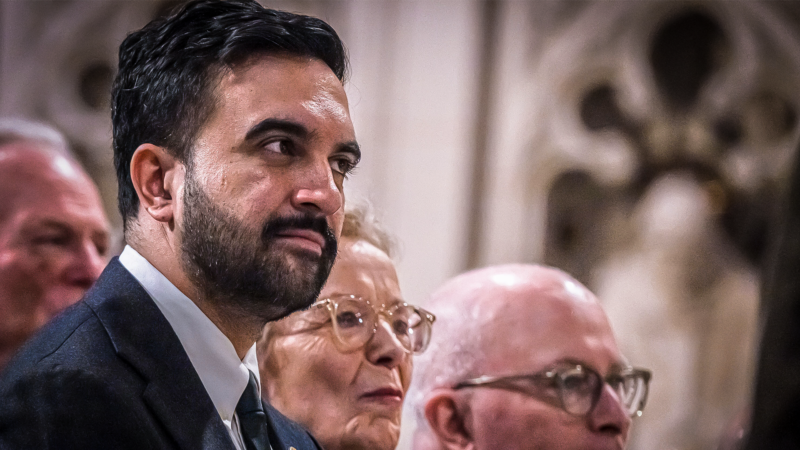
New York City Mayor Zohran Mamdani recently warned New Yorkers that they have "for too long been misled and misinformed about the true state of our city's finances." He added, "I will be blunt. New York City is facing a serious fiscal crisis."
The mayor's proposed solutions are troubling: either raise the city's already sky-high taxes or reach into its rainy day fund and retiree health-care trust fund, money set aside to pay for promised retirement health care benefits for public employees. Both of the mayor's ideas would worsen the city's financial woes and debt while also failing to address the underlying problem.
Borrowing from public employee health-care benefit reserves is an especially bad and costly idea. Withdrawn amounts must be replenished by taxpayers, plus interest. As it is, the city's health care fund has just 5 cents of every $1 needed to pay for benefits that have already been promised to workers and retirees.
New York City has nearly $100 billion in unfunded retiree health care liabilities, roughly $10,800 of debt for every New Yorker, the third-highest per capita debt in the nation, and more than 10 times the national average for cities, Reason Foundation finds.
These obligations are a direct and growing drag on the city's budget. In 2025, the city spent $10 billion on public pensions and $4 billion on retiree health care benefits, which together accounted for roughly 12 percent of the city's spending. Pension costs are already on par with what the city spends on public safety and courts combined, and the city isn't even fully funding what it knows it will owe.
Zoom out, and the city's debt picture gets worse. Public pensions and retiree health care costs account for more than half of the city's total long-term debt. When including bonds, New York City has roughly $260 billion in long-term liabilities, amounting to nearly $30,000 in debt for every resident. In absolute terms, New York is the most indebted city in the country; on a per capita basis, it ranks fourth in long-term debt.
The rest of New York state, including Albany, is not doing better. New York's per capita state and local government debt is the highest in the nation—worse than Illinois and New Jersey.
New York City's public employee benefit costs are only expected to rise. For decades, city politicians such as former Mayors Michael Bloomberg, Bill de Blasio, Eric Adams, and others have promised stellar benefits to government workers without paying for them, kicking the bill to future taxpayers. As workers retire and need more health care services, the bill comes due.
The city's pension and health care costs will increasingly crowd out basic services, including public safety, education, infrastructure, and parks. As the city shifts money to make debt payments and cover retirees' health care and benefits, it will either have to cut spending or impose ever-higher taxes on its residents and businesses.
Raiding the rainy day and health care funds won't deliver the money needed to fund Mamdani's promised free child care, free buses, affordable housing, or other spending. If the mayor wants to prevent public pension debt and health care costs from siphoning away more and more money from his preferred spending, the solution is to confront public-employee debt, not create more of it.
Mamdani should align the generous retiree health care benefits provided to public workers with those in the private sector. City and state lawmakers should also move to place future city employees in a defined-contribution system, such as 401(k) plans that most people get in the private sector. Mamdani should be particularly well-positioned to explain to public workers why these reforms are in the best interest of all New Yorkers and the city.
New York's fiscal woes are not a revenue problem. They are a cost problem, largely driven by unfunded pension and health care benefit promises that grow automatically year after year. Further underfunding benefits might create budgetary breathing room in the short run, but the big bill for taxpayers will come due, with interest.