
Iran War Leaves Helium Supply Chains Up in the Air
About 30 percent of the world's helium supply depends on the Strait of Hormuz. Its closure means higher prices for tech manufacturing and advanced medical care.
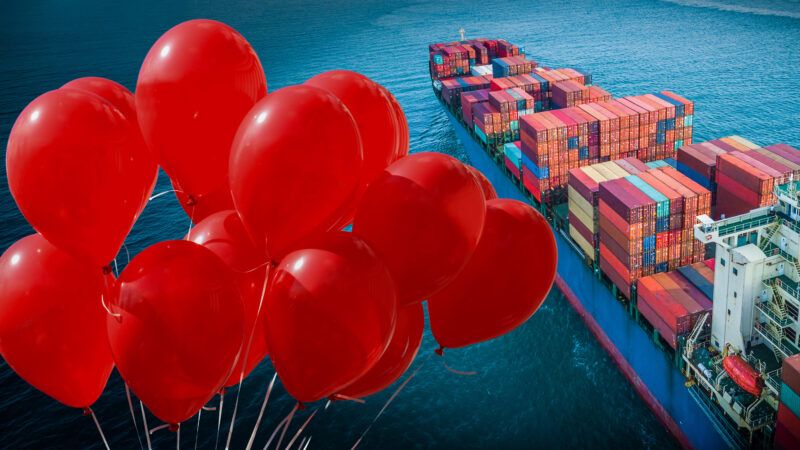
With the Strait of Hormuz effectively closed due to the ongoing war with Iran, oil prices have surged to more than $100 per barrel. But oil is not the only crucial commodity facing a supply chain crunch.
About a third of the world's commercial helium supply comes from Qatar, where the gas is produced as a by-product of natural gas extraction. Getting that helium to the global market requires shipping through the Strait of Hormuz, and its closure is putting an upward pressure on prices.
"The spot price for helium has moved up pretty dramatically. I would say 70 [percent] to 100 percent in a week," says Phil Kornbluth, president of Kornbluth Helium Consulting and a 30-year veteran of the industry.
Because most helium is traded via contracts, the spike in the spot price for the gas did not immediately affect most downstream industries. But suppliers may begin declaring force majeure and canceling those contracts if the closure of the strait looks to be a long-term situation.
That would cause helium prices to pop.
"Depending on how long this lasts, it could become a severe shortage, and prices could go up a lot," Kornbluth warns.
That doesn't just mean more expensive birthday balloons and fill-ups for the Goodyear blimp. Helium is used in the manufacturing process for high-end computer chips, where its inert nature and cooling abilities are crucial for semiconductor fabrication.
"Should the supply of helium be immediately disrupted, there would likely be shocks to the global semiconductor manufacturing industry," the Semiconductor Industry Association warned in comments to the federal government in 2023.
"A lot of the world doesn't run without semiconductors and you can't make semiconductors without helium, period," Rich Gottwald, CEO of the Compressed Gas Association, recently told Politico.
Helium is also used inside MRI machines and other advanced medical imaging tech to cool magnets, and it is essential for all forms of welding—once again because it is nonreactive and a good thermal conductor. It is also crucial for rocket launches, where helium is used to pressurize fuel tanks.
Because Qatari natural gas infrastructure has been damaged or taken offline by the war, Kornbluth thinks the helium market will likely face a disruption even if the Strait of Hormuz is reopened quickly. Amid the threat of drone attacks earlier this month, QatarEnergy halted all production at its natural gas facilities. It will take weeks to restart production once the war has ended.
Helium must be shipped in specialized containers that can handle extreme low temperatures, because helium boils at -269 degrees Fahrenheit. That makes it difficult to build alternative supply chains on short notice.
The global market for helium—like oil, fertilizer, and other commodities that pass through the Strait of Hormuz in large quantities—is a useful illustration of the cost of going to war, which always extends well beyond the battlefield.
It is unclear how soon shipping traffic through the strait will be able to resume. In the meantime, consumers and industries far removed from the war effort are likely to feel the consequences of this poorly planned and ineptly executed war—which has also killed more than a dozen Americans and hundreds of others. Like helium itself, the costs of this war are proving difficult to contain.