
The NFL's Rooney Rule Is a Well-Intentioned Failure
Plus: Bad Bunny’s halftime show and more on Super Bowl LX
Hello and welcome to another edition of Free Agent! I hope you enjoyed your fair share of 1.5 billion chicken wings this weekend—I think I left about 1 billion for the rest of you.
Before we slide into the NFL offseason, let's get one last football-filled newsletter in the books. Next week I'll have plenty of Olympics content for you.
Don't miss sports coverage from Jason Russell and Reason.
Locker Room Links
- Thanks a lot, NFL: Players on the Seahawks and Patriots face a huge tax bill for the week they spent in California leading up to the Super Bowl.
- "What the Bills Mafia Teaches Us About Resilience," authored by my friend Carolyn Gorman.
- The medals at the Olympics keep breaking. "Don't jump in them….It broke."
- The NBA is "likely" to vote on expansion this summer, with Las Vegas and Seattle the most "favored" cities to get new teams.
- Athletes are always innovating and trying to find new ways to win within the rules—but ski jumping's "Crotch-gate" goes too far.
- Nordic combined (ski jumping combined with cross-country skiing) has been in the Olympics for over a century, but still doesn't allow female athletes for some reason.
- Vice President J.D. Vance was briefly booed at the Olympics opening ceremony, but the U.S. team got loud cheers.
- Elsewhere in Reason: "San Francisco Public Schoolteachers Make $79,468 for 184 Days of Work. Now They're Striking for Even More."
- Why do Olympians keep getting asked how they feel about Trump? Because you keep reading about their answers.
the athletes are being asked political questions by the press because reporters know whichever way the athletes answer, people will be furious, and so they will click. this is not the athletes' fault. this is the press's fault. and your fault for clicking.
— Mike Solana (@micsolana) February 8, 2026
Coaching Carousel Quotas
In the afterglow of the Super Bowl, the NFL's annual head coaching carousel came to a stop when Seattle Seahawks offensive coordinator Klint Kubiak confirmed that he would be taking the helm of the Las Vegas Raiders, the final vacancy.
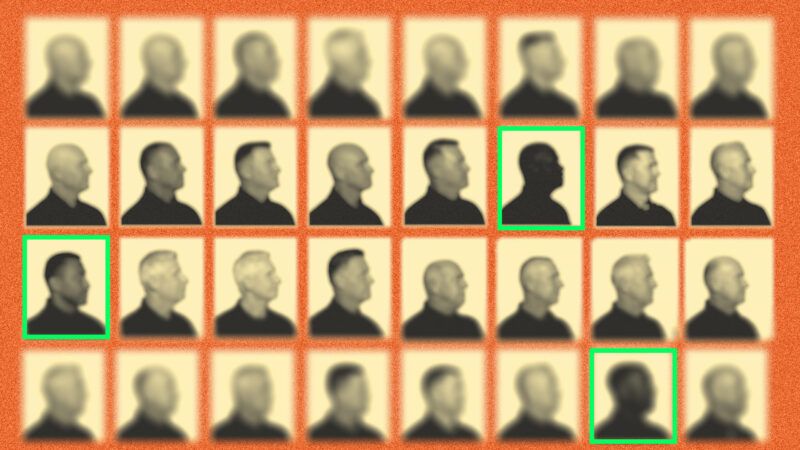
Nearly a third of the league's teams got new head coaches this offseason. It was, as ESPN's Dan Graziano noted, "Not the *greatest* year the Rooney Rule has ever had." None of the 10 new coaches is black, despite about 70 percent of the league's players being black. Of the NFL's 32 coaches, only three are black (Aaron Glenn, DeMeco Ryans, and Todd Bowles). For what it's worth, new Tennessee Titans coach Robert Saleh is considered a minority by the NFL, because his parents are Lebanese.
The Rooney Rule, more than two decades old, has noble intentions: In the NFL's words, it "encourages hiring best practices to foster and provide opportunity to diverse leadership throughout the NFL." The rule at first required teams with a head coaching vacancy to interview at least one minority candidate for the job. But this has led to some awkward situations, especially when teams start a coaching search with a particular coach in mind.
In 2003, for example, it was widely reported that Steve Mariucci was the top candidate for the Lions head coaching position. No one who would have fulfilled the Rooney Rule's requirements was interested in wasting their time interviewing for a job they thought was already filled. The league fined the Lions $200,000 for failing to comply. Two decades later, Brian Flores sued the league for racial discrimination, claiming he was given multiple sham interviews where teams interviewed him for head coaching jobs without genuine interest in hiring him. (You may recall this lawsuit resulted from texts sent by Bill Belichick congratulating the wrong Brian.)
Yet after two decades of the Rooney Rule's failure to bring about their racial utopia, the NFL doubled down. The league now requires teams to interview two minority candidates before hiring a head coach, general manager, or coordinator position (a quarterback coach requires just one minority candidate interview). Also, every team must have on staff one offensive assistant who is "female or minority."
This year, John Harbaugh was obviously the hottest name on the coaching market. But before hiring him, the Giants still had to interview minority candidates to satisfy the Rooney Rule (they interviewed two: Raheem Morris and Antonio Pierce). In theory, those minority candidates could have wowed Giants leadership with their preparation and charisma. In reality, they stood no chance against Harbaugh's résumé. (One wonders how much interviews really influence hiring decisions over a coach's résumé in the NFL.)
I'm sure in a league as large as the NFL, there's some racial discrimination in hiring—sometimes blatant, sometimes subtle. But competition can be the solution: If bad teams are discriminating against minorities, inclusive teams will win more often by just being open to the best talent. The Rooney Rule, with its good intentions, certainly isn't fixing the problem. Instead, it leaves minority coaching candidates feeling like pawns.
Annual Outrage
The halftime show seems to spur a lot of right-wing complaints in recent history. With Spanish-speaking artist Bad Bunny's history of anti-Donald Trump activism (he recently used one of his Grammy acceptance speeches to say "ICE out," a reference to Immigration and Customs Enforcement), most of the outrage at this year's halftime show felt preplanned.
Maybe Trump was expecting an "ICE out" t-shirt or some other kind of anti-Trump message from Bad Bunny, but in the end there was nothing overtly political, just a football that said "Together, we are America."
Trump complained anyway, writing on Truth Social that the halftime show was "one of the worst, EVER!" and calling it "an affront to the Greatness of America."
As Reason's Eric Boehm points out: "Over the past 20 years, the Super Bowl halftime show has featured performances by the Rolling Stones, the Who, Coldplay, Shakira, and Rihanna. Unlike Bad Bunny, the Puerto Rican pop star who drew a record audience for his performance at Sunday's Super Bowl LX, none of those performers are American citizens. Yet the conservative outrage machine cranked itself into high gear on social media to denounce Bad Bunny, ostensibly because he is somehow undeserving or insufficiently American."
In Monday's Reason Roundup, Christian Britschgi notes that: "It's probably not a great signal for the health of the discourse if the country even threatens to split into red-team/blue-team Super Bowl halftime shows. The endless partisanship and culture-war bickering is tiresome."
Eric wisely pointed out that the game itself isn't about race or politics—just raw competition.
"The Super Bowl is a color-blind celebration of excellence," he writes. "It is the exact opposite of the Diversity, Equity, and Inclusion efforts that the Trump coalition opposes. [Kenneth] Walker did not win MVP because he's black, and the Seahawks did not win the championship because they had a roster with a bureaucrat-approved mix of races. They won because they are very good at their jobs." (As a Seahawks fan, Eric is a bit biased, though.) Between that and the Super Bowl being an awesome celebration of capitalism, conservatives should be embracing the event instead of complaining.
Super Bummer
Besides Bad Bunny, I have a lot of Super Bowl thoughts that don't really form a cohesive narrative, so here's a brain dump.
This year's game was the worst Super Bowl since the Patriots beat the Rams 13–3 in Super Bowl LIII. That game was at least tied after three quarters, I suppose, whereas the Seahawks' 12–0 lead after three quarters felt fairly insurmountable for the tepid Patriots offense (although the Pats scored 13 points in the fourth quarter, so I guess not!). Four touchdowns in the fourth quarter still saved this game from being even worse.
Maybe because they missed the playoffs last year and only barely won their division this year, the narrative seems to be that the Seahawks weren't actually that great (they only beat Philip Rivers and the Colts by two points back in December!). But various analytics dudes show the Seahawks were clearly the best team this year, and possibly one of the best NFL teams in recent history (in spite of, not because of, Sam Darnold).
It was a shame that fans couldn't vote for special teams players like Seahawks kicker Jason Myers for MVP. He had 17 points in the game, more than the entire Patriots team. Punter Michael Dickson would have been another worthy candidate, too. Last week I said, as a Michigan State fan, that "Walker winning MVP is probably my best-case scenario," so I guess I shouldn't complain.
The '90s nostalgia of the "Good Will Dunkin'" commercial was probably my favorite, although it didn't make me any more likely to go find a Dunkin' store. I was surprised by the heart-wrenching Lay's potato chip ad—most snacks do comedic angles. There were plenty of commercials to not like, but I'll award "least favorite" to the singing toilets that came on while I was trying to scarf down some wings. Some of my favorites of all-time remain the "It's a Tide Ad" campaign from 2018 and Michael Cera's CeraVe ad from two years ago.
I'm feeling chatty about the whole event, so feel free to send your thoughts about the game, halftime show, or commercials at freeagent@reason.com.
Replay of the Week
Defense won the day for the Seahawks, so it was nice to see them get a touchdown (even if it was probably a lucky deflection).
SEAHAWKS DEFENSIVE TOUCHDOWN FOR UCHENNA NWOSU OMG
Super Bowl LX on NBC
Stream on @NFLPlus + Peacock pic.twitter.com/9FPzCiciQt— NFL (@NFL) February 9, 2026
That's all for this week. Enjoy watching the real event of the weekend, the men's pursuit race in biathlon (5:15 a.m. Eastern on Sunday). Did you know almost 10 percent of Winter Olympics medals are in biathlon?