
What Does It Mean When Wealth Flees Democracies for an Authoritarian City-State?
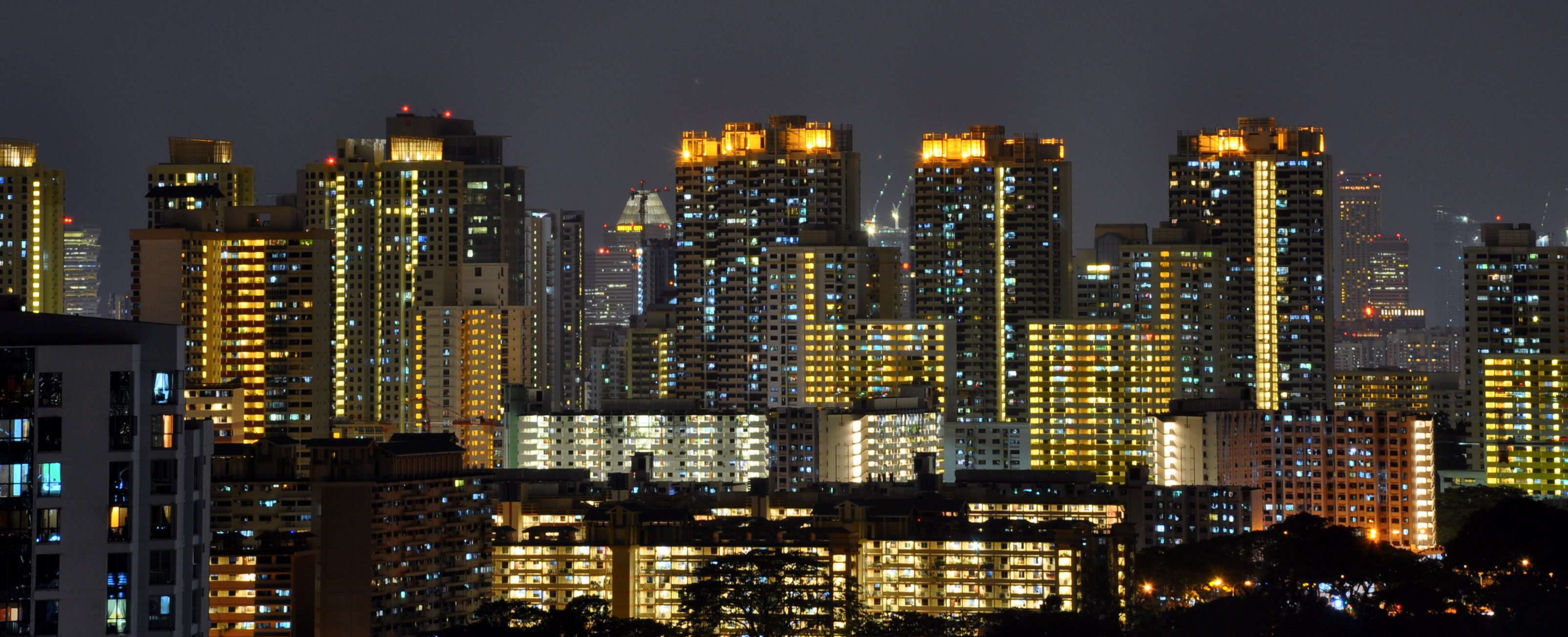
It's probably not news to anybody who followed the soap opera over Eduardo Saverin's renunciation of U.S. citizenship or who knows that Jim Rogers decamped with his family from the land of the free, but Singapore has become a haven for wealth. The Wall Street Journal has a fascinating piece up on just why that is — why people are flocking to the city-state to maintain current fortunes or to make new ones. The Journal's Shibani Mahtani compares Singapore's magnetic attraction for wealth to the Gilded Age, and it's true New York City and London were once centers of wild and flamboyant prosperity just like the city-state is today. But the United States and United Kingdom of the 1880s were centers of increasing democracy and personal freedom in both the civil and economic spheres — certainly by contrast to the alternatives. By contrast, Singapore of today is known as a not-so-democratic state where civil liberties are kept in sharp check. That these qualities seem to be the draw should be of concern to anybody who thinks that free elections and open debate should offer a better path to the future than one-party rule.
As Mahtani writes:
But what really checks all the right boxes for many of the world's ultra-rich is Singapore's obsession with order, predictability and control, all of which give comfort to individuals whose fortunes have recently gone down the drain in many parts of the world. It doesn't hurt that Singapore has some of the lowest taxes in the world, including none on capital gains and most foreign dividends. But it also has relatively secretive private banking laws and zero harassment from paparazzi or protesters, whose activities are narrowly proscribed by Singaporean authorities, further creating an aura of order and stability. Ronen Palan, a professor of international political economy and an expert on offshore wealth and tax havens at City University in London, believes that while Switzerland is "clearly suffering" from the pressure put on its private-wealth sector from the European Union and the U.S., Singapore is a "very secretive location" where many—Asians in particular—believe their wealth will be spared scrutiny from Western regulators.
It's worth emphasizing that authoritarianism in and of itself isn't an attraction. Mahtani points out "[t]he Chinese alone are reportedly exporting billions of dollars, saying they no longer trust their government and want to put their money elsewhere." The Singapore regime is seen as trustworthy and respectful of economic freedom even as it clamps down otherwise. So money flows there from unpredictable authoritarian regimes, "rambunctious—and some say, corrupt—democracies" like India and Indonesia, and also established democracies like those in Europe and North America that are seen as high-tax, overregulated and no longer welcoming to business and wealth creation.
America's tax laws have made it increasingly unattractive for people with jobs and business interests around the world to remain U.S. citizens. And France has made itself an international laughingstock by pushing euros and wealthy citizens toward the exit. Many of the world's best-established democracies seem to have lost the knack for allowing their citizens to build and enjoy prosperity.
That doesn't mean that Singapore is necessarily the anointed successor. Mahtani points out that Singapore's political leaders are under pressure from citizens to build more of a tax-hungry welfare state, and from other countries to compromise the city-state's status as a wealth haven.
But, for now, money and moneyed people are flowing out of relatively free democracies that used to excel at encouraging economic opportunity along with civil liberty and into an authoritarian enclave that bans chewing gum and muzzles the press — but allows considerable economic freedom. That's an unpleasant commentary on the road down which democratic governments have wandered, and it can't be a good sign for the future.