
Artifact: Text Lit
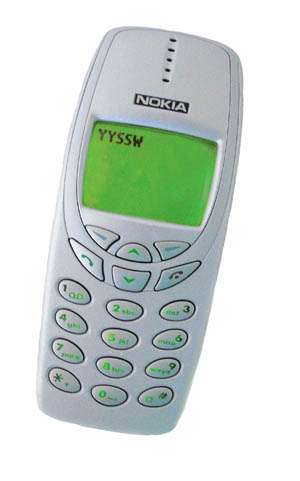
This common cell phone may strike you as unremarkable, a familiar telecom device that, in this photo, is displaying the text message, "Yeah, yeah. Sure, sure. Whatever." But look again, because this device is morphing into something different: a linguistic and literary influence.
This winter, a French writer named Phil Marso published a short novel aimed at young readers and written entirely in France's own intricately developed cellphonic argot. It's an anti-smoking story titled Pa Sage a Taba (Smoking Isn't Smart). Agence France Presse has quoted a passage from Marso's text: "6 j t'aspRge d'O 2 kologne histoar 2 partaG le odeurs ke tu me fe subir?" ("What if I spray you with cologne so you can share the smells you make me suffer?")
It's notable that the first work of cellphonic fiction has appeared in a culture as notoriously protective of language as France, with its official usage cops. Yet Scotland was struggling a year ago with student-written essays in text-message English (see "Text Talk," June 2003). This appears to be a spreading phenomenon.
Many experts have assumed that digital media would transform reading and have predicted the eventual triumph of the e-book. YYSSW. We're still waiting. In fact, it may be self-expression that's being reshaped, one message at a time.